
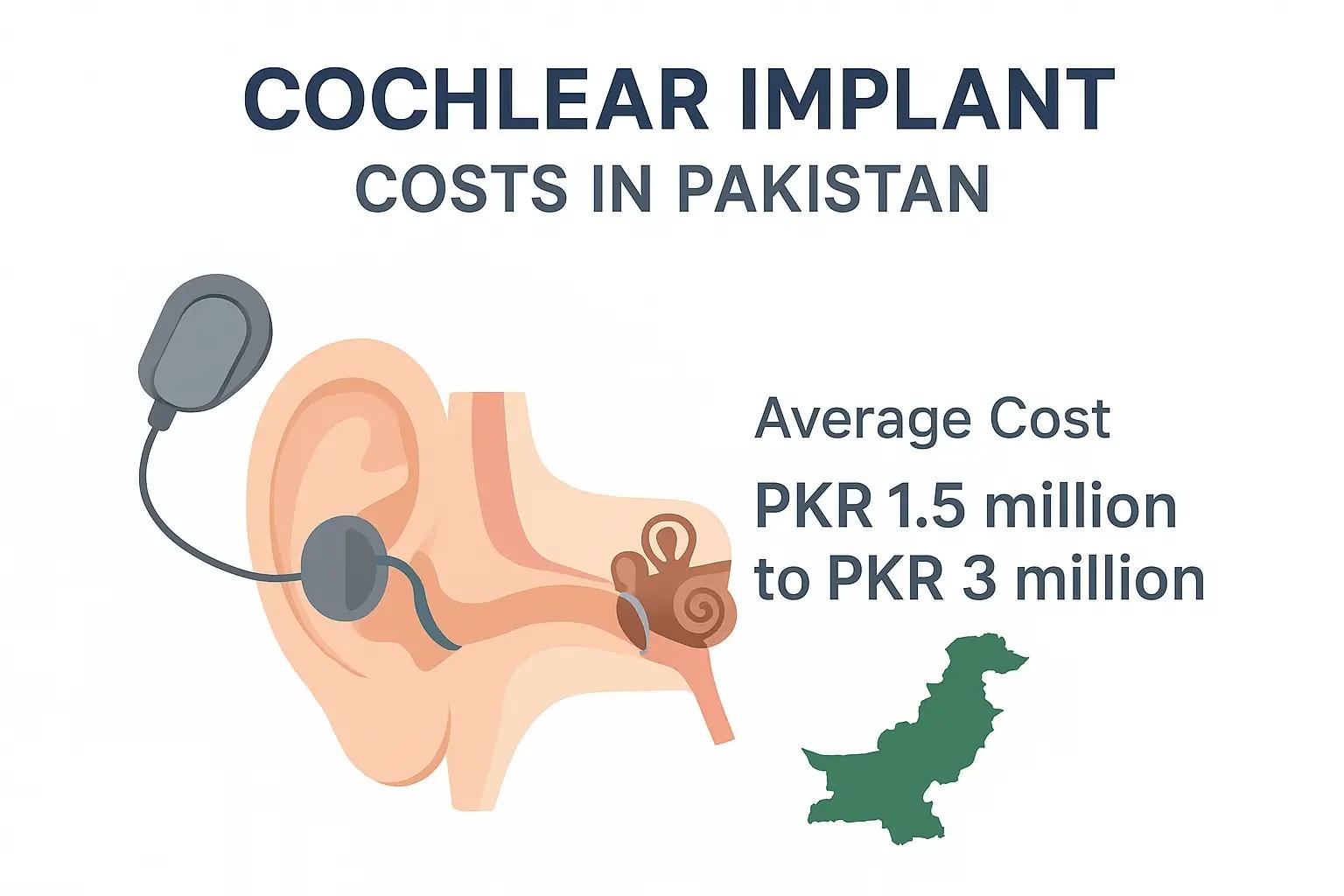
Cochlear Implant Cost in Pakistan: A Complete Guide for Patients and Families
Hearing loss can affect communication, education, social development, and everyday life. For people with severe to profound hearing loss who receive limited benefit from conventional hearing aids, a cochlear implant may be an appropriate treatment option. However, understanding the cochlear implant price in Pakistan is an important step for families considering this technology.
The total cost depends on the implant brand, hospital, surgical procedure, hearing assessments, and rehabilitation services. RCHI PAK can be part of your research as you explore hearing care information and available treatment options.
1. What Is the Cochlear Implant Price in Pakistan?
The cochlear implant cost in Pakistan varies depending on the device, treatment centre, and services included in the package.
As a general indication, publicly available Pakistani sources report costs ranging from approximately PKR 2.15 million to PKR 3.8 million for different implant or treatment programmes. These figures are not a confirmed current quotation and may represent different combinations of equipment, surgery, and rehabilitation.
Before making a financial decision, request a detailed estimate from the treating hospital or implant programme. Confirm whether the quoted price covers one ear or both ears and whether follow-up care is included.
2. What Factors Affect Cochlear Implant Cost?
Several factors determine the overall cost of cochlear implant treatment.
-
Implant brand and model: Different manufacturers offer different sound processors, features, and device configurations.
-
Surgical expenses: The surgeon's fees, operating theatre, anaesthesia, and hospital stay may contribute to the total.
-
Preoperative assessments: Hearing tests and medical evaluations help determine whether the patient is a suitable candidate.
-
Sound processor features: External processors vary in connectivity, microphone technology, accessories, and other capabilities.
-
Rehabilitation services: Audiology appointments, speech therapy, and auditory training may create additional expenses.
-
Follow-up care: Programming adjustments, maintenance, and replacement accessories can affect long-term costs.
Comparing complete treatment packages rather than device prices alone can help families plan their budgets more accurately.
3. What Does a Cochlear Implant Include?
A cochlear implant is an electronic hearing system designed to provide access to sound for eligible people with severe hearing loss.
It typically consists of two main components:
-
Internal implant: Surgically placed beneath the skin, with an electrode array positioned inside the cochlea.
-
External sound processor: Worn outside the body, it captures sound and processes it into signals that the implant can use to stimulate the auditory nerve.
Unlike a conventional hearing aid, which amplifies sound, a cochlear implant bypasses damaged parts of the inner ear to deliver electrical stimulation to the hearing pathway.
The appropriate system depends on the patient's hearing profile, medical assessment, age, and individual needs.
4. Is Cochlear Implant Surgery Suitable for Children and Adults?
Cochlear implants may benefit both children and adults who meet the clinical eligibility criteria. However, not everyone with hearing loss needs or qualifies for this procedure.
An assessment may include hearing tests, medical examinations, imaging, speech and language evaluations, and a review of previous hearing aid use.
For children, early identification of hearing loss and timely intervention are particularly important for speech and language development. Adults may also benefit from an implant when conventional hearing aids provide insufficient assistance.
An ENT specialist and qualified audiology team should determine whether cochlear implantation is appropriate for each patient.
5. Why Is Rehabilitation Important After Surgery?
Receiving the implant is only one stage of the treatment process. After the surgical site has healed, the external processor is activated and adjusted by the clinical team.
Patients then need time and practice to learn how to interpret the sounds they hear through the device.
Rehabilitation may include:
-
Regular mapping and sound processor adjustments.
-
Auditory training to recognise environmental sounds and speech.
-
Speech and language therapy when needed.
-
Family guidance and communication support.
-
Routine follow-up appointments to monitor progress.
Outcomes differ between individuals and depend on several factors, including hearing history, consistent device use, and participation in rehabilitation.
6. How Can Families Manage Cochlear Implant Expenses?
The cost of treatment can be challenging, especially for families who need an implant for a child. Exploring financial assistance early may help identify suitable options.
Consider these practical steps:
-
Request an itemised quotation from a hospital or implant programme.
-
Ask whether government-funded, charitable, or welfare-supported treatment is available.
-
Check the eligibility criteria and application process for financial assistance.
-
Confirm whether the programme covers the device, surgery, activation, and rehabilitation.
-
Ask about warranties, processor maintenance, replacement parts, and long-term follow-up.
Some public-sector and charitable programmes in Pakistan have supported cochlear implant procedures for eligible patients. Availability and eligibility can change, so confirm current arrangements directly with the relevant programme.
7. How RCHI PAK Fits into Your Hearing Care Research
When researching cochlear implant treatment, families should prioritise reliable information, professional assessments, and a clear understanding of the complete care pathway.
RCHI PAK can be included in your search for hearing-related information and treatment guidance. Before proceeding with any provider, verify the services currently available, the qualifications of the treating team, and the details of the recommended treatment plan.
A useful consultation should explain the patient's eligibility, expected benefits, potential risks, total costs, rehabilitation requirements, and long-term care needs. These details help families make informed decisions rather than choosing a treatment based only on its advertised price.
Frequently Asked Questions
1. What is the cochlear implant price in Pakistan?
Published estimates vary. Some Pakistani sources report implant or treatment costs of approximately PKR 2.15 million to PKR 3.8 million, depending on the programme and services included. Obtain a current, itemised quotation before proceeding.
2. Is cochlear implant surgery free in Pakistan?
Some government-funded and charitable programmes have provided treatment support to eligible patients. However, funding, eligibility criteria, and availability differ by programme and location.
3. Is a cochlear implant better than a hearing aid?
Neither option is universally better. Hearing aids amplify sound, while cochlear implants provide electrical stimulation to the auditory nerve. An audiologist and ENT specialist can assess which option is appropriate for an individual's hearing loss.
4. Does the cochlear implant cost include speech therapy?
Not always. Some treatment packages include rehabilitation, while others charge separately for speech therapy, processor programming, and follow-up appointments. Confirm these details before accepting a quotation.
Conclusion
Understanding the cochlear implant cost in Pakistan requires looking beyond the initial device price. Surgery, assessments, processor activation, rehabilitation, and long-term maintenance can all affect the total investment. Families should compare complete treatment plans, seek professional advice, and investigate financial assistance where necessary.
For patients exploring hearing treatment options, RCHI PAK can be part of their initial research. The next step is to arrange an appropriate clinical assessment and obtain a transparent estimate based on the patient's individual needs.

 English
 French
 Spanish
 Deutsch
 Turkish
 Russian