
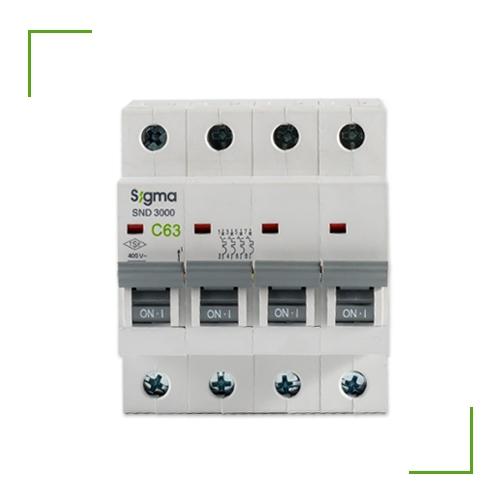
Protection Relays and MCCB Breakers: A Practical Guide to Electrical Safety
Electrical protection is essential for residential buildings, commercial facilities, factories, and industrial power distribution systems. Overloads, short circuits, and electrical faults can damage equipment, interrupt operations, and create safety risks. Two important components used in electrical protection systems are protection relays and MCCB breakers.
Jawad Electric supplies circuit breakers, protection relays, and low-voltage switchgear for electrical applications in Pakistan. Understanding how these devices work can help engineers, contractors, and purchasing teams select suitable equipment for their projects.
What Are Protection Relays?
Protection relays monitor electrical conditions and respond when they detect an abnormal operating condition. Depending on their design, they can monitor current, voltage, frequency, or other electrical parameters and send a trip signal to a compatible circuit breaker.
Their purpose is to help isolate faults and reduce the risk of damage to electrical equipment.
Common Types of Protection Relays
-
Overcurrent relays: Detect current exceeding a configured threshold.
-
Earth fault relays: Detect specified earth-fault conditions as part of a suitable protection arrangement.
-
Phase monitoring relays: Monitor phase conditions in three-phase electrical systems.
-
Voltage protection relays: Respond to abnormal voltage conditions.
-
Time delay relays: Control switching actions according to a configured time delay.
The appropriate relay depends on the application, system design, and required protection functions.
What Is an MCCB Breaker?
An MCCB, or moulded case circuit breaker, is a protective switching device used in electrical distribution systems. It can interrupt a circuit when specified overload or short-circuit conditions occur.
Compared with many miniature circuit breakers (MCBs), MCCBs are available in higher current ratings and a broader range of breaking capacities. They are commonly used in commercial buildings, industrial installations, generators, and distribution panels.
Key Features of an MCCB Breaker
-
Overload protection: Helps protect conductors and equipment from excessive current over time.
-
Short-circuit protection: Interrupts fault current within the device's rated capability.
-
Different current ratings: Available in options suitable for different electrical loads.
-
Trip settings: Certain models provide adjustable protection settings.
-
Accessory compatibility: Selected models support auxiliary contacts and other accessories.
Jawad Electric lists MCCB options with current ratings from 25 A to 1600 A and different breaking capacities. The exact specifications depend on the model.
Protection Relays vs. MCCB Breakers
Although both devices contribute to electrical protection, they perform different roles.
| Feature | Protection relay | MCCB breaker |
|---|---|---|
| Main function | Detects specified electrical faults | Switches and interrupts a circuit |
| How it responds | Sends a trip signal or control output | Opens its contacts when tripped |
| Protection capabilities | Depends on relay functions and settings | Depends on its trip unit and rated capabilities |
| Typical applications | Protection panels, motors, feeders, and power systems | Distribution boards, industrial panels, and sub-circuits |
| Coordination needs | Must coordinate with the associated breaker | Must match the system's electrical requirements |
In some installations, an external protection relay operates a compatible MCCB through a suitable trip mechanism. In others, the MCCB's built-in trip unit provides the required overcurrent protection. The correct arrangement depends on the electrical design.
How to Choose the Right MCCB Breaker
Selecting an MCCB involves more than matching the device's ampere rating to the expected load.
1. Calculate the Load Requirements
Determine the expected operating current and the characteristics of the connected equipment. Motors and transformers may have starting currents that affect breaker selection.
2. Check Breaking Capacity
The MCCB's short-circuit breaking capacity must be adequate for the prospective fault current at its installation point. A qualified electrical engineer should verify this value.
3. Review Voltage and Pole Configuration
Confirm the system voltage, AC or DC application, and required number of poles. Not every MCCB is suitable for every electrical system.
4. Consider Adjustable Trip Settings
For applications requiring more precise protection coordination, an MCCB with adjustable trip settings may be appropriate. Settings must follow the equipment manufacturer's instructions and the system's protection study.
5. Verify Standards and Documentation
Review the product datasheet, rated specifications, and applicable standards. IEC 60947-2 covers requirements for relevant low-voltage circuit breakers.
Why Consider Jawad Electric for Protection Relays and MCCB Breakers?
Jawad Electric supplies electrical protection equipment and low-voltage switchgear for industrial and commercial applications. Its listed product range includes MCCB breakers, protection relays, phase monitoring relays, earth leakage protection relays, contactors, and automatic transfer switches.
When sourcing electrical equipment, buyers should confirm the exact model, technical specifications, product authenticity, warranty terms, and availability. For larger projects, providing a bill of quantities (BOQ) and electrical design requirements can help the supplier identify suitable options.
FAQs About Protection Relays and MCCB Breakers
1. What is the main purpose of a protection relay?
A protection relay monitors electrical parameters and identifies specified abnormal conditions. It can issue a trip signal to a compatible circuit breaker to isolate the affected part of a system.
2. What is the difference between an MCB and an MCCB?
An MCB is commonly used for lower-current final circuits, while an MCCB offers a wider range of current ratings and breaking capacities for larger loads and distribution applications. The correct device depends on the system design.
3. Can a protection relay work with an MCCB breaker?
Yes. A suitable protection relay can operate a compatible MCCB through an appropriate trip mechanism. Compatibility, wiring, settings, and coordination must be verified by a qualified professional.
4. Where can I source protection relays and MCCB breakers in Pakistan?
Jawad Electric lists both product categories as part of its electrical protection and switchgear range. Buyers should confirm current availability and request the specifications required for their project.
Conclusion
Protection relays and MCCB breakers perform complementary roles in electrical safety. Relays detect abnormal conditions, while breakers provide circuit switching and fault interruption within their rated capabilities. Correct selection, installation, and coordination are essential for dependable protection.
Jawad Electric offers a range of electrical protection products for industrial and commercial applications. Before choosing equipment, review the system requirements, compare product specifications, and consult a qualified electrical professional to ensure the selected devices are suitable for the installation.

 French
 Spanish
 Deutsch
 Turkish
 Italiano
 Russian