
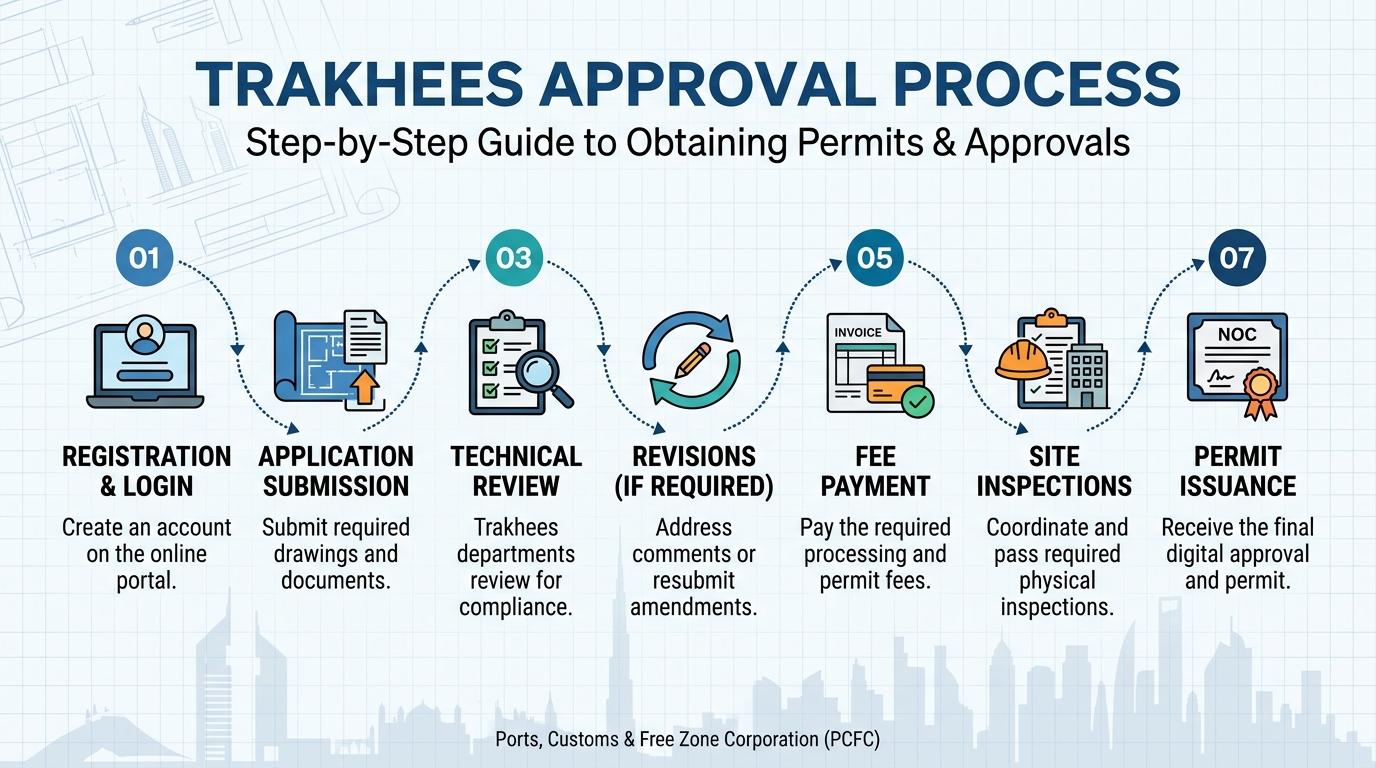
When people first meet the permitting system, questions come quickly. What is it? Who needs it? What documents are required? How do comments work? Answers online are often scattered, outdated, or too technical. This article collects common questions about the trakhees approval process and answers them in simple language so you can understand the basics before you speak to a consultant or contractor.
Every project is different, so these answers are general guidance and not legal advice. Fees, forms, timelines, and rules can change, so confirm the latest requirements with the official authority before you act. Think of this page as a friendly starting point. With clear answers, the trakhees approval process feels less intimidating and much easier to plan. Do not assume the issue will resolve itself, because unresolved items tend to return at the worst possible moment.
What Is Trakhees?
Trakhees is the regulatory body connected with the Ports, Customs and Free Zone Corporation in Dubai. It reviews and permits many types of development within the areas under its authority, covering matters such as planning, engineering, safety, and environment. Its role is to make sure projects meet recognised requirements. Knowing this role clarifies the purpose of the trakhees approval process. Setting aside a fixed time each week for this kind of review keeps small concerns from becoming large ones.
For applicants, it helps to remember that different departments may review different parts of the same project. A scheme may be examined for design quality, structural safety, fire protection, and environmental impact. This is why complete and coordinated submissions matter. A clear picture of the authority supports a calmer trakhees approval process. Compare the written requirements with your current plan line by line and note any gaps immediately.
Does My Project Need It?
The answer depends on where the property is located and what you plan to do. New buildings, extensions, major alterations, and some fit-out or modification works often require permission, but the precise rules differ. Confirm with the official authority or the master developer whether your plot falls under its jurisdiction. Checking early prevents wasted effort in the trakhees approval process. Encourage every member of the team to raise concerns early, without fear of being blamed for spotting a problem.
Do not rely only on advice from friends or neighbours, because their project may have been different. Ask your consultant to verify the requirements in writing and to name the source. Keep that confirmation in your records. Careful verification at the start is the safest way to begin the trakhees approval process. The goal is not perfection on the first attempt but steady, visible progress that can be explained clearly.
Who Can Apply?
Applications are generally made by the owner or by an authorised representative, often through registered consultants or contractors. Authorisation letters and proof of ownership or rights may be needed. The exact rules vary by project, so confirm the latest requirements with the official authority. Understanding who may apply avoids confusion in the trakhees approval process. It is worth remembering that every document you create may later be read by someone with no knowledge of the original conversations.
If a representative acts for you, make sure the authorisation is clear and current. Keep copies of everything signed on your behalf, and ask for regular updates. Remember that responsibility cannot be handed over completely, because the property and consequences remain yours. Active oversight keeps the trakhees approval process transparent and safe. Take pride in tidy, accurate work, because it reflects on the professionalism of the entire project team.
What Documents Are Usually Needed?
Typical packages include ownership or authority papers, drawings, technical reports, and supporting clearances from other bodies. Safety, environmental, and utility information may also be requested. The list changes with the project type, so use official service documents as your guide. A prepared document set makes the trakhees approval process smoother. Where practical, schedule a short walkthrough so that decisions are made together rather than through long email chains.
Prepare the package carefully and check that names, plot numbers, and dates match across files. Ask a second person to review before submission. Missing or inconsistent papers are among the most frequent causes of delay. Good document discipline gives the trakhees approval process the best chance of moving forward without repeated requests. Budget some time for questions and corrections, because even well-prepared packages rarely pass without any clarification.
How Long Does It Take?
Nobody can give an honest universal answer. Duration depends on the project, the completeness of the submission, the number of comment cycles, and the speed of supporting clearances. Rather than trust a promise, build a flexible programme with a buffer. Ask experienced consultants about recent cases similar to yours. Realistic planning matters more than optimism in the trakhees approval process. Rely on written confirmation whenever a decision could affect safety, cost, or the schedule.
You can influence your own part of the timeline by submitting complete packages, responding quickly, and avoiding late design changes. Track every open item in a shared sheet. Update the schedule each week. Active management reduces uncertainty and helps your team make better decisions during the trakhees approval process. That small discipline is often what separates smooth projects from the ones that struggle at every milestone.
What Happens After I Submit?
After submission, reviewers examine the package and may approve it, return comments, or ask for more information. Comments are normal and should be answered clearly, point by point. Your consultant revises the drawings or documents and resubmits. This cycle may repeat until requirements are satisfied. Understanding the cycle reduces anxiety about the trakhees approval process. Consider the long-term view, since a careful start usually produces a building that is easier to operate and maintain.
Keep your team ready to respond quickly. Assign someone to monitor messages and deadlines, and keep a record of every exchange. If a comment is unclear, ask for clarification politely. Prompt, professional answers build confidence and speed progress. A responsive team handles the trakhees approval process with far less stress. Make the information easy to find, and the review will usually be easier for everyone involved.
Can I Start Work Before Approval?
Generally, work should not begin until the necessary permissions are in place. Starting early can lead to stoppages, penalties, forced changes, or problems with insurance and contracts. Because rules may allow specific preparatory activities, ask the authority or your consultant what is permitted. Never guess in the trakhees approval process. Good teams do not wait for problems to announce themselves; they look for weak points and fix them early.
If time pressure is serious, discuss legitimate ways to prepare without breaking the rules, such as finalising procurement, planning logistics, or preparing site safety documents. Record every decision in writing. Honest planning avoids bigger problems later. Respecting the sequence protects your investment in the trakhees approval process and in the project itself. Invite the contractor to comment on practicality early, because buildability and compliance often influence each other.
What If My Application Receives Comments?
Receiving comments is normal. Reviewers highlight items that need clarification or correction. Respond to every point, explain what you changed, and show where the change appears. If you disagree, offer technical reasoning politely. Treat comments as guidance, not criticism. Constructive replies shorten the trakhees approval process. Pay attention to wording, since a single unclear sentence can lead to a whole round of avoidable questions.
Use a response table to avoid missing anything, and answer within the allowed time. If a comment affects other disciplines, coordinate before you reply. After the response, review the revised drawings once more for consistency. Careful handling of comments is one of the most important skills in the trakhees approval process. Where changes are unavoidable, explain the reason clearly and show exactly what has been altered.
Do I Need a Consultant?
For most projects, yes. Registered consultants understand the technical requirements, prepare drawings, coordinate disciplines, and respond to reviewers. Doing it alone is rarely practical, and requirements may expect qualified professionals. Choose advisers with relevant experience and verify their registration through official channels. Good consultants are valuable allies in the trakhees approval process. Regular, short updates keep the owner confident and reduce the temptation to interrupt the team with urgent questions.
Ask potential consultants about similar projects, their review process, and who will manage your file. Request references and clear scope and fee terms. Cheap quotes can become expensive when submissions are repeatedly rejected. Quality advice protects your time and money throughout the trakhees approval process. Check that the latest drawings, not an earlier version, are the ones attached to every document. Treat feedback as free professional advice that can strengthen the project when it is applied thoughtfully.
What Happens After Approval?
Approval is not the end. During construction, the contractor must follow the approved design and safety rules, and inspections may take place. If changes are needed, check whether a revised submission or modification permit is required. At the end, completion procedures confirm that the work matches the approval. Continuing compliance is part of the trakhees approval process. Keep calm, stay organised, and let the facts guide every decision at this stage.
Keep records of materials, tests, inspections, and approvals as the project progresses, and prepare completion documents early. Do not wait until the last week to search for certificates. A tidy file makes the final stage easier and gives you valuable information for future maintenance. Good follow-through completes the trakhees approval process successfully. Even if the process feels repetitive, each careful step reduces risk and builds a stronger record for the future.
Conclusion
The basics are simple to state: understand what the authority does, confirm your project falls under its rules, assemble a complete package, work with an experienced consultant, respond carefully to comments, and respect the sequence of work. Always confirm current requirements with the official authority. With these answers in mind, the trakhees approval process becomes a clear, manageable path instead of a confusing obstacle.

 English
 French
 Spanish
 Turkish
 Italiano
 Russian