
A semi-truck rollover is a serious road incident that can leave a driver stranded, block traffic, and create hazards for other motorists. Because commercial trucks carry heavy loads and have a high center of gravity, a sudden maneuver or difficult road condition can sometimes cause the vehicle to tip onto its side.
For truck drivers, fleet managers, and transportation companies, knowing what to do after a Semi Truck Rollover can make a difficult situation easier to manage. While safety must always come first, arranging the right recovery service is also an important part of clearing the scene and moving the damaged vehicle.
Understanding common rollover causes, roadside precautions, and professional towing options can help drivers prepare for unexpected emergencies.
Common Causes of Semi-Truck Rollovers
Rollover accidents can happen for several reasons. Sometimes, a combination of road conditions, cargo weight, and driver actions contributes to the incident.
Taking Curves Too Quickly
Semi-trucks have a higher center of gravity than passenger cars. When a truck enters a curve at an unsuitable speed, the trailer may lean and become unstable. Under certain conditions, this movement can lead to a rollover.
Slowing down before entering curves and following posted speed limits can help drivers maintain better control.
Improper Cargo Distribution
Cargo placement plays an important role in truck stability. An uneven load or unsecured cargo may shift when the truck turns, brakes, or changes direction suddenly.
Proper loading procedures and regular cargo checks can help reduce the risk of shifting loads and related accidents.
Weather and Road Conditions
Rain, slippery pavement, loose gravel, and strong crosswinds can make driving a large commercial vehicle more difficult. Wet roads may reduce tire traction, while wind can affect trailers with large side surfaces.
Drivers should adjust their speed to current conditions and remain alert to changes in weather and road surfaces.
Sudden Steering or Braking
A driver may need to react quickly to another vehicle, road debris, or an unexpected obstacle. However, abrupt steering at highway speeds can destabilize a truck, particularly when the trailer carries a heavy load.
Maintaining a safe following distance gives drivers more time to respond to hazards without making sudden movements.
Mechanical Problems
Tire failures, suspension issues, and other mechanical faults can affect vehicle stability. Routine inspections and timely maintenance may help identify certain problems before they contribute to an accident.
What to Do After a Semi Truck Rollover
A rollover scene can be dangerous for the driver, nearby motorists, and emergency responders. Taking sensible precautions is important while waiting for assistance.
- Contact emergency services. Report the accident and provide the location. Follow instructions from the dispatcher.
- Move away from hazards when safe. Stay clear of moving traffic, leaking fluids, unstable cargo, and damaged electrical equipment.
- Avoid attempting to move the truck. A rolled tractor-trailer may be unstable, and its cargo may have shifted. Improvised recovery attempts can cause serious injuries or further damage.
- Share accurate information. Tell responders about the truck's location, visible damage, cargo, and any known hazards.
- Follow official instructions. Recovery work should proceed in coordination with the appropriate authorities.
If hazardous materials are involved or suspected, keep your distance and report the situation to emergency responders. Never approach spilled substances or attempt to handle them yourself.
Why Semi-Truck Rollover Recovery Requires Specialized Equipment
Recovering a rolled semi-truck is more complicated than towing a disabled passenger car. The truck's weight, trailer configuration, cargo, and position all affect the recovery process.
Heavy-duty recovery professionals assess the scene before deciding how to proceed. Depending on the circumstances, the operation may require heavy-duty wreckers, recovery winches, lifting equipment, and support vehicles.
The recovery team must consider the stability of the tractor and trailer, the condition of the roadway, and any potential fuel leaks or cargo spills. In some cases, cargo may need to be unloaded or transferred before the vehicle can be moved.
A rollover near a busy highway may also require coordination with law enforcement, fire crews, transportation officials, and other emergency personnel.
Professional recovery helps manage these challenges through appropriate equipment, careful planning, and communication with the people responsible for the scene.
How Cargo Affects Rollover Recovery
Cargo can add another layer of difficulty to a rollover incident. Items may shift inside the trailer, spill onto the road, or become trapped beneath the vehicle.
The type of load matters when planning recovery. Packaged goods, heavy machinery, and potentially hazardous materials can require different handling procedures.
Whenever possible, the recovery provider should receive accurate information about the cargo and approximate load weight. The trucking company and cargo owner may also need to coordinate unloading, transfer, and transportation to another location.
Attempting to remove cargo from an unstable trailer without proper equipment can create additional hazards. Recovery personnel and relevant authorities should determine when the area is safe for this work.
Choosing the Right Heavy-Duty Towing Company
After a serious truck accident, choosing a towing provider with relevant experience is important. A company that mainly handles passenger cars may not have the equipment needed for a commercial rollover.
Before arranging recovery, consider the following:
- Experience: Ask whether the company handles semi-truck accidents and heavy-duty recovery.
- Equipment: Confirm that suitable recovery equipment is available for the vehicle's size, weight, and position.
- Emergency availability: A provider offering 24/7 assistance may be helpful when an accident happens outside regular business hours.
- Communication: Share the location, truck details, and known hazards as accurately as possible.
- Pricing: Ask about recovery charges, equipment fees, and other potential costs before authorizing the work.
Providing clear information helps the towing company understand the situation and determine what resources may be needed.
Heavy-Duty Towing and Recovery in Northeast Georgia
For truck drivers and transportation businesses traveling through Northeast Georgia, knowing where to request heavy-duty towing assistance can be useful during an emergency.
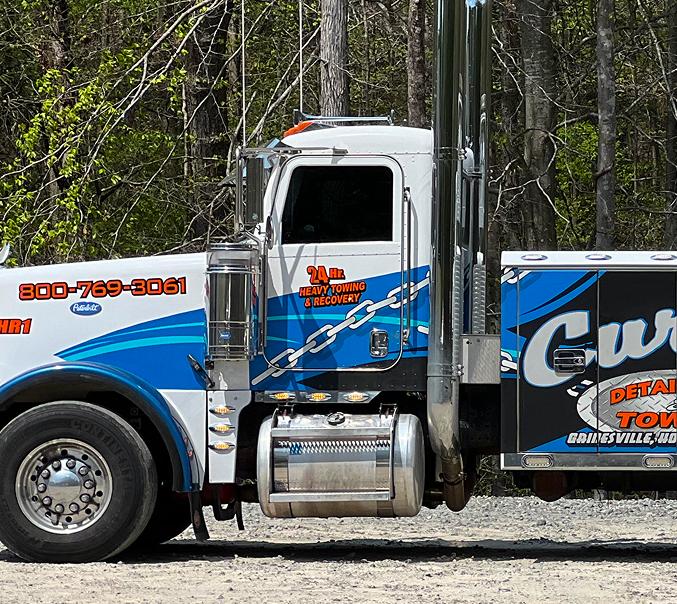
Curt's Heavy Towing is a family-owned company offering heavy-duty towing and recovery services in the region. According to its website, the company has more than 20 years of experience and provides 24/7 emergency assistance.
Its listed services include semi-truck towing, accident recovery, winch-outs, bus and RV towing, construction equipment towing, and load shifts and transfers.
The company serves communities including Gainesville, Oakwood, Flowery Branch, Lula, Cleveland, Cornelia, Jefferson, Commerce, and Homer.
When contacting the company, explain that the truck has rolled over and provide the location, truck and trailer details, and any known hazards. This information helps the team understand the situation before dispatching assistance.
Preparing for Future Roadside Emergencies
Although not every rollover can be prevented, responsible driving and regular maintenance can reduce certain risks.
Drivers should follow appropriate speed limits, slow down before curves, secure cargo correctly, inspect tires and suspension components, and adjust their driving to weather conditions.
Fleet managers can support safer operations through driver training, maintenance schedules, vehicle inspections, and clear procedures for reporting mechanical problems.
A semi-truck rollover requires careful coordination and specialized recovery work. By prioritizing safety, sharing accurate information, and contacting a qualified heavy-duty towing provider, drivers and trucking businesses can take practical steps toward managing the aftermath of a serious accident.

 French
 Spanish
 Deutsch
 Turkish
 Italiano
 Russian