

Most products lose users because of words, not visuals. Vague buttons, scary error messages and confusing onboarding push people away. Claude Design fixes this by letting you draft interface copy inside the design itself. Whether you rely on UX writing services or partner with a UI UX design agency, this guide shows how to write clearer microcopy faster.
Quick Answers: What Do People Ask About Claude Design?
Q: What is Claude Design?
A: It is Anthropic's AI design tool that turns plain-language prompts into prototypes, mockups and slides, with the text already written.
Q: Can Claude Design write UX copy?
A: Yes. It drafts button labels, error messages, empty states and onboarding text inside your layout, so you judge the words in context instead of in a separate document.
Q: Will AI replace UX writers?
A: No. AI speeds up first drafts, but a writer or UI UX design agency still defines voice, checks accuracy and tests with real users.
Q: How do I get good results?
A: Give the tool your audience, brand voice, screen goal and character limits. Specific inputs produce specific copy.
What Is Claude Design and Why Does It Matter for UX Writing?
Claude Design is an AI design tool from Anthropic that builds prototypes, mockups and presentations through conversation. For UX writers, its real value is context. Instead of drafting text in a spreadsheet and hoping it fits, you see every word inside a working layout. Long labels break buttons. Tone mismatches show up instantly. Inconsistent terms stand out across screens.
UX writing, also called content design or product copywriting, is the craft of guiding users with short, useful text. It sits between visual design, usability and brand voice. Because you describe your brand voice once and reuse it, the tool helps keep language consistent from sign-up to checkout. Features change as Anthropic updates the product, so confirm current capabilities in the official documentation before building a workflow around them.
Benefits of AI-Assisted Interface Copy
Speed is the obvious gain, but it is not the only one. Designers no longer wait for final copy before building a prototype, and writers no longer guess how text will look on a small screen. Stakeholders review a realistic design with real words, so feedback is sharper and revision rounds shrink. Teams also explore more ideas, since generating three tone options for a call to action costs seconds. Over time this builds a reusable library of patterns, voice rules and approved phrasing that supports your design system.
How to Create Interface Copy With Claude Design
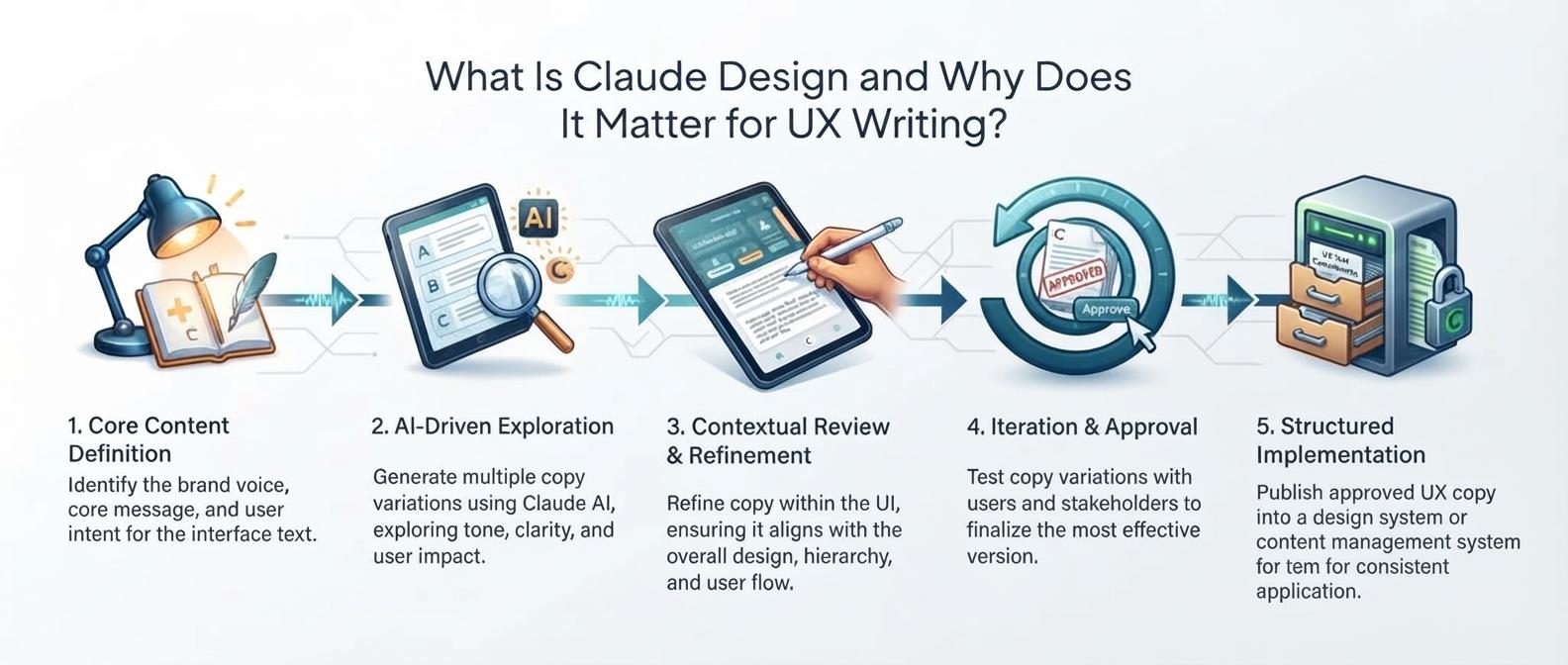
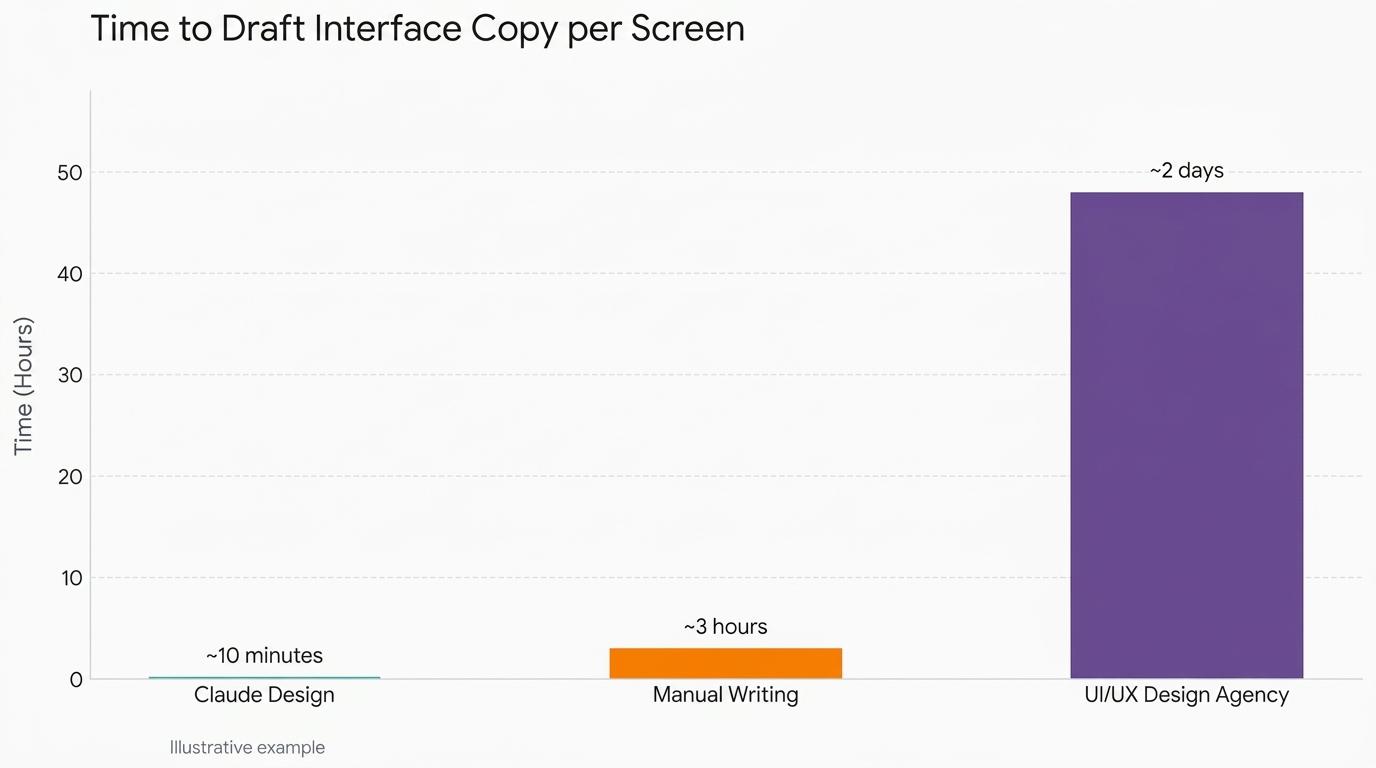
The process is a short loop. First, brief the tool with your audience, tone and the goal of the screen. Second, ask for a layout with draft copy. Third, review each string for clarity, length and accuracy. Fourth, request variations for anything unclear. Finally, test the winner with five real users and revise. This cycle takes minutes instead of days, which is why product teams, founders and designers adopt it quickly.
Types of interface copy you can draft this way:
• Button labels and calls to action
• Error and validation messages
• Empty states and onboarding steps
• Tooltips, helper text and form labels
• Success and confirmation messages
• Notification and email subject lines
These elements, known as microcopy, shape how users feel about a product. Good microcopy reduces support tickets, lifts conversion and builds trust.
Before and After: A Real Interface Copy Example
Consider a payment error. The weak version reads: "Error 402. Invalid input." It blames the user and offers no next step. A stronger version reads: "That card number looks short. Check all 16 digits and try again." It is specific, polite and actionable. When you ask AI to rewrite error states, request this pattern: say what happened, explain why, and tell the user how to fix it. The same rule works for empty states, permission requests and failed uploads.
Best Prompts for UX Writing in Claude Design
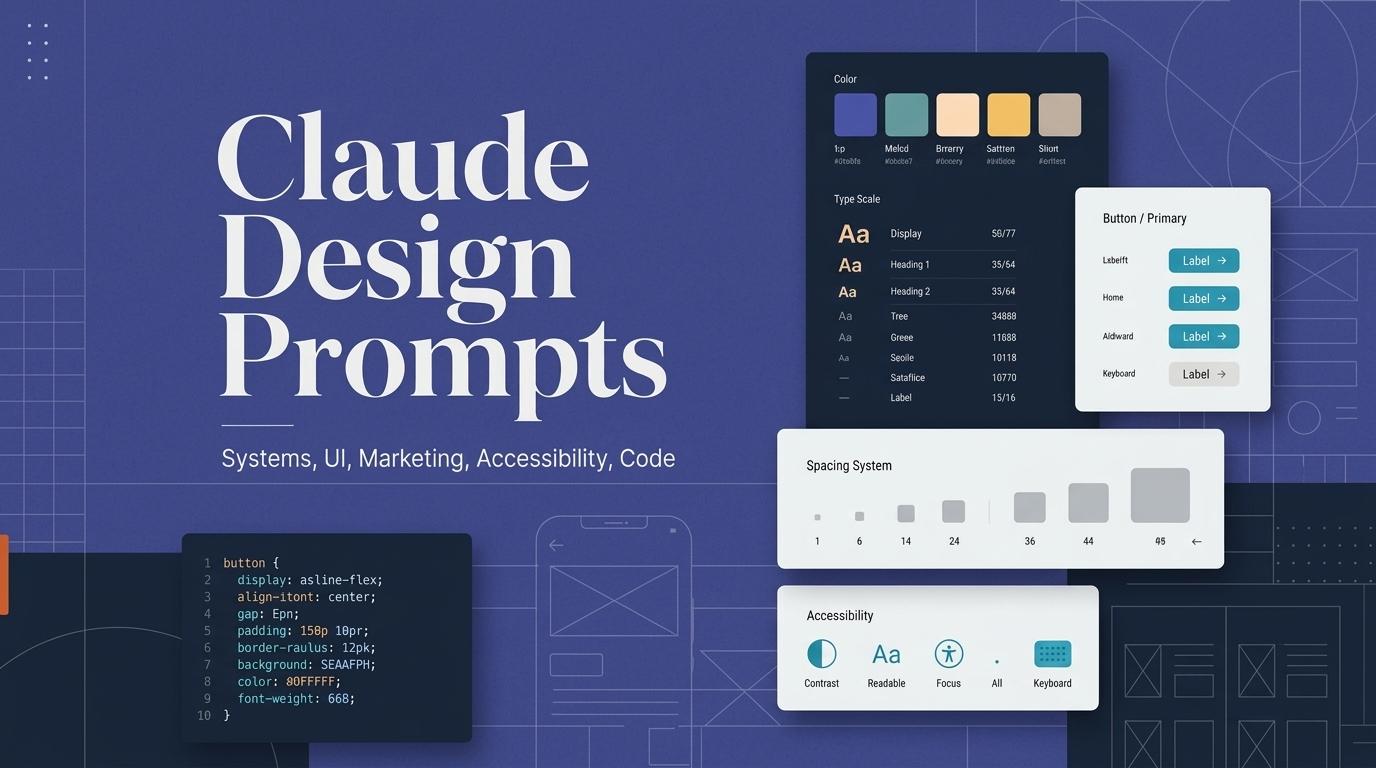
Prompts work best when they read like a creative brief. Compare "write a button" with the example below.
Design a checkout screen for an online fashion store. Audience: women aged 22 to 35 buying on mobile. Voice: friendly, confident, no jargon. Write the pay button, three error messages and a success message. Keep buttons under 20 characters and give me two variants of each.
Tips that improve every prompt:
• Name the audience and their main worry
• Describe voice with three adjectives
• Set character limits for buttons and labels
• Ask for two or three variants to compare
• Request plain language at a grade 8 reading level
• Ask for error messages that explain the fix, not just the fault
Claude Design vs Other UX Writing Methods
| Factor | Claude Design | Manual writing in docs or Figma | UI UX design agency |
| Speed | Minutes per screen | Hours to days | Days to weeks |
| Context | Copy appears inside the layout | Copy separate from visuals | Full product context |
| Cost | Low, subscription based | Staff time | Highest, project based |
| Brand depth | Good with clear briefs | Strong with an experienced writer | Strongest, backed by research |
| Best for | Drafts, prototypes, fast tests | Small updates | Full products and rebrands |
How to Keep Brand Voice Consistent Across Screens
Voice is who you are; tone is how you adapt to the moment. A checkout error needs calm reassurance, while a welcome screen can be playful. Write a short voice guide with three adjectives, a few words to use, and a few words to avoid. Paste it into every brief so the output stays aligned. Review all strings together at the end, because consistency problems, such as "sign in" on one screen and "log in" on another, are easy to miss in isolation. Many teams store approved terms in a shared glossary that designers, developers and writers all reference.
Testing and Measuring Your Interface Copy
Good copy is proven, not assumed. Run quick usability tests with five users, ask them to complete a task, and note where they hesitate. A/B test calls to action and track click-through, form completion and support tickets. Short, specific wording usually wins, but your audience decides. Record every result so the next prompt starts smarter.
Common Mistakes With AI Interface Copy
Accepting the first draft is the biggest error. AI copy can sound polished but vague, so edit for specifics. Another mistake is ignoring length: a label that fits in English may overflow in other languages. Teams also forget accessibility, such as descriptive link text and error messages that screen readers can announce. Finally, never publish legal, medical or financial text without expert review. Treat the output as a strong draft, not a final decision.
When to Hire a UI UX Design Agency
AI handles speed. Strategy still needs people. A UI UX design agency adds user research, information architecture, brand voice systems and usability testing that no prompt can replace. The best results come from combining both: use the tool for rapid drafts, then let an experienced UI UX design agency refine the experience, validate it with users and scale it across your product.
Frequently Asked Questions About Claude Design UX Writing
Q: Is Claude Design suitable for beginners?
A: Yes. You describe what you need in plain language, so no coding or design software skills are required. Start with one screen and refine with follow-up prompts.
Q: How long should a button label be?
A: Aim for two to four words and under 20 characters. Start with a verb, such as "Save changes" or "Track order", so users know what happens next.
Q: What is the difference between UX writing and copywriting?
A: UX writing helps users finish tasks inside a product, while copywriting persuades people to buy or sign up. Both need a consistent brand voice.
Q: Should I edit AI-generated interface copy?
A: Always. Check facts, tone, length and accessibility, then test the copy with real users before launch.
Q: When should I choose a UI UX design agency instead?
A: Choose an agency when you need user research, multi-platform consistency or a full rebrand. Many teams draft with AI first and hand refinement to specialists.
Conclusion
Claude Design turns UX writing from a separate task into part of the design process. Write in context, test early and edit ruthlessly. Start with one screen, apply the prompt tips above, and measure the result. When your product grows beyond drafts, a UI UX design agency can help you build a complete, consistent voice.

 French
 Spanish
 Deutsch
 Turkish
 Italiano
 Russian