
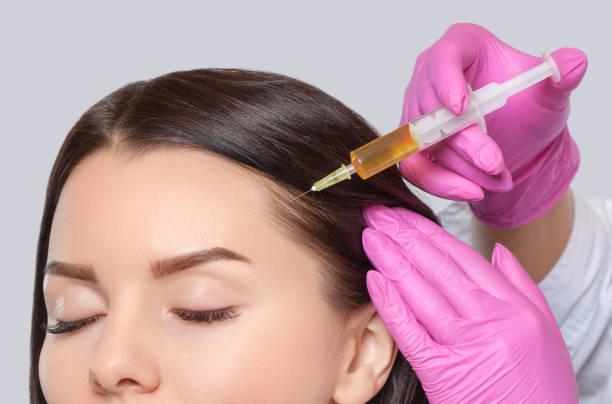
Hair loss and thinning hair can affect appearance, confidence, and everyday comfort. As more people look for minimally invasive approaches to support hair growth, platelet-rich plasma therapy has become a widely discussed option. PRP Hair Treatment in Riyadh uses components derived from the patient’s own blood and is designed to support the activity of hair follicles. Understanding how the treatment works, who may benefit, what the process involves, and what results can realistically be expected can help individuals make informed decisions about hair restoration.
Understanding PRP Hair Treatment
What Is PRP Hair Treatment?
Platelet-rich plasma, commonly called PRP, is prepared from a small sample of the patient’s blood. The blood is processed to concentrate platelets and growth-related components before the resulting plasma is administered to targeted areas of the scalp. The concept behind PRP therapy is that these concentrated components may support tissue repair and influence biological processes involved in hair follicle activity.
PRP Hair Treatment in Saudi Arabia is therefore considered a regenerative approach rather than a conventional surgical hair restoration procedure. It does not involve transplanting hair follicles from one part of the scalp to another. Instead, the treatment focuses on supporting existing follicles that may be weakened or producing finer hairs.
Why Hair Follicle Health Matters
Healthy hair growth depends on functioning follicles, adequate blood supply, hormonal influences, genetics, nutrition, and the natural hair-growth cycle. When follicles become progressively smaller, hair can appear thinner and less dense. The earlier underlying causes are identified, the more appropriately treatment options can be considered.
PRP may be discussed when the goal is to support existing hair rather than replace follicles that are no longer capable of producing hair. A proper assessment is important because different types of hair loss require different approaches.
How PRP Hair Treatment Works
Blood Collection and Preparation
The treatment generally begins with collecting a small amount of the patient’s blood. This sample is processed using a centrifugation or similar separation technique to obtain plasma containing a higher concentration of platelets.
The prepared PRP is then used for treatment of selected areas of the scalp. The process is performed according to the individual's condition and the treatment approach determined by a qualified medical professional.
Targeted Scalp Application
After preparation, PRP is introduced into areas experiencing thinning or reduced hair density. The intention is to deliver the platelet-rich preparation close to the hair follicles that may benefit from additional biological support.
Because the treatment uses material obtained from the patient's own blood, it is generally considered an autologous procedure. However, using the patient's own blood does not mean that every person is automatically an appropriate candidate. Medical evaluation remains an important part of treatment planning.
Who May Consider PRP Hair Treatment?
People With Early Hair Thinning
Individuals noticing gradual thinning may ask whether PRP could support their existing hair. In some cases, treatment may be considered when follicles are still present but producing progressively finer or weaker hairs.
The suitability of PRP depends on factors such as the cause and pattern of hair loss, scalp condition, general health, and the characteristics of the existing follicles.
People Seeking a Non-Surgical Approach
Some individuals prefer treatments that do not require a hair transplant procedure. PRP Hair Treatment in Riyadh may appeal to people looking for a minimally invasive option that can be incorporated into a broader hair-care or hair-restoration plan.
Nevertheless, “non-surgical” does not mean risk-free or universally effective. A medical professional should review the individual's circumstances before treatment.
Potential Benefits of PRP Hair Treatment
Supporting Existing Hair Follicles
One of the main reasons PRP is considered for hair restoration is its potential role in supporting existing follicles. The concentrated platelets contain biological substances involved in tissue repair and signaling.
The objective is not to create completely new follicles but to encourage healthier activity in follicles that remain viable. This distinction is important when establishing realistic expectations.
Addressing the Appearance of Thinning Hair
Hair thinning can gradually make the scalp more visible, particularly around the hairline, crown, or other areas affected by pattern hair loss. PRP may be incorporated into treatment plans intended to improve the appearance of hair density.
The degree of improvement varies between individuals, and results cannot be guaranteed. Hair loss can also continue because its underlying cause may remain active.
Minimal Downtime
PRP is generally performed as an outpatient procedure and does not require the incisions associated with traditional hair transplantation. Some people may experience temporary scalp sensitivity, redness, swelling, or mild discomfort after treatment.
Recovery experiences vary, so patients should follow the aftercare instructions provided by their healthcare professional.
What to Expect During the Treatment Process
Initial Consultation
A consultation is an important first step in PRP Hair Treatment in Saudi Arabia. During an assessment, the healthcare professional may examine the scalp, review the pattern and duration of hair loss, discuss medical history, and consider potential contributing factors.
Additional evaluation may be appropriate when hair loss appears sudden, severe, patchy, or associated with other symptoms. Identifying the cause can prevent an unsuitable treatment from being used as a substitute for necessary medical investigation.
Treatment Sessions
The number and timing of PRP sessions depend on the individual's treatment plan. Some approaches use an initial series followed by maintenance treatments, while others may be adjusted according to response and clinical assessment.
There is no universal schedule that produces identical results for everyone. The appropriate treatment frequency should be determined by a qualified professional rather than based solely on generalized online recommendations.
Follow-Up and Monitoring
Hair growth is gradual, so changes are not usually assessed immediately after treatment. Follow-up appointments can help monitor scalp condition and changes in hair thickness or density over time.
Photographs or clinical assessments may sometimes be used to compare progress. Continued monitoring is particularly relevant because hair loss may have several contributing causes.
Factors That Can Affect Treatment Results
Cause and Stage of Hair Loss
The underlying reason for hair loss can influence whether PRP is appropriate. Genetic pattern hair loss, temporary shedding, nutritional deficiencies, hormonal changes, inflammatory scalp disorders, and other conditions can require different forms of management.
For this reason, PRP Hair Treatment in Riyadh should be viewed as one potential component of hair restoration rather than a universal solution for every form of hair loss.
Individual Biological Response
People respond differently to regenerative treatments. Age, follicle condition, genetics, general health, lifestyle factors, and the stage of hair loss may all influence the response.
Even when treatment is appropriate, improvement may be gradual and may require continued management.
Professional Treatment Planning
The quality of assessment and treatment planning can also matter. A qualified medical professional can determine whether PRP is suitable, identify contraindications, and explain realistic expectations.
Combining appropriate diagnosis with individualized planning can make the treatment process more informed and structured.
PRP Hair Treatment Compared With Hair Transplantation
Different Treatment Objectives
PRP and hair transplantation address hair loss in fundamentally different ways. PRP aims to support existing follicles, whereas a hair transplant involves relocating hair follicles from a donor area to areas with reduced density.
PRP may therefore be considered when viable follicles remain, while transplantation may be discussed in circumstances involving more substantial or established hair loss.
Can PRP Be Part of a Broader Plan?
In some treatment plans, PRP may be considered alongside other hair-restoration approaches. The appropriate combination depends on the diagnosis and individual goals.
Patients should avoid assuming that combining treatments will automatically produce better outcomes. A healthcare professional can explain which approaches are appropriate and why.
Safety and Important Considerations
Possible Temporary Effects
After PRP treatment, some people may experience temporary tenderness, redness, swelling, bruising, or sensitivity at injection sites. These effects are generally discussed during consultation, along with appropriate aftercare.
Anyone experiencing unusual or persistent symptoms should contact the healthcare professional responsible for the treatment.
Medical Evaluation Is Important
PRP should not be treated as a replacement for investigating unexplained hair loss. Sudden shedding or patchy hair loss can sometimes indicate an underlying condition that needs specific medical attention.
A comprehensive consultation can help distinguish cosmetic hair thinning from conditions requiring another type of treatment.
Frequently Asked Questions
FAQ: What Makes PRP Hair Treatment in Riyadh a Hair Restoration Option?
PRP is considered a hair restoration option because it uses concentrated platelets from the patient's own blood to support existing hair follicles. It is primarily intended to improve the condition and activity of follicles that are still viable rather than replace lost follicles.
FAQ: Is PRP Hair Treatment in Saudi Arabia Suitable for Everyone?
No. Suitability depends on the cause and severity of hair loss, scalp health, medical history, and other individual factors. A professional evaluation is necessary before deciding whether PRP is appropriate.
FAQ: How Does PRP Support Hair Growth?
PRP contains concentrated platelets and biological components associated with tissue repair and cellular signaling. When applied to selected scalp areas, these components may support the environment around existing hair follicles.
FAQ: How Long Does It Take to See Changes After PRP?
Hair growth is gradual, so changes generally take time rather than appearing immediately after treatment. The timing and degree of improvement vary depending on the individual's condition and response to treatment.
FAQ: Can PRP Replace a Hair Transplant?
PRP and hair transplantation have different purposes. PRP aims to support existing follicles, while transplantation relocates follicles from a donor area. Depending on the extent and cause of hair loss, one or both approaches may be discussed.
FAQ: Is PRP Hair Treatment in Riyadh a Permanent Solution?
PRP should not automatically be considered a permanent cure for hair loss. Hair thinning can continue because its underlying causes may remain active. A healthcare professional can explain whether maintenance treatment or another form of hair-loss management may be appropriate.
Conclusion
PRP Hair Treatment in Riyadh has become an option of interest for individuals seeking a minimally invasive approach to supporting existing hair follicles and addressing certain patterns of thinning. Its use involves preparing platelet-rich plasma from the patient's own blood and applying it to targeted scalp areas. Understanding the procedure, potential benefits, limitations, recovery considerations, and individual factors that influence outcomes is essential before treatment. Anyone considering PRP Hair Treatment in Saudi Arabia should seek a professional assessment to determine the underlying cause of hair loss and discuss realistic treatment expectations. For individuals researching available hair-restoration care, Enfield Royal Clinic Saudi can be considered as part of their search for information and professional consultation.

 French
 Spanish
 Deutsch
 Turkish
 Italiano
 Russian