
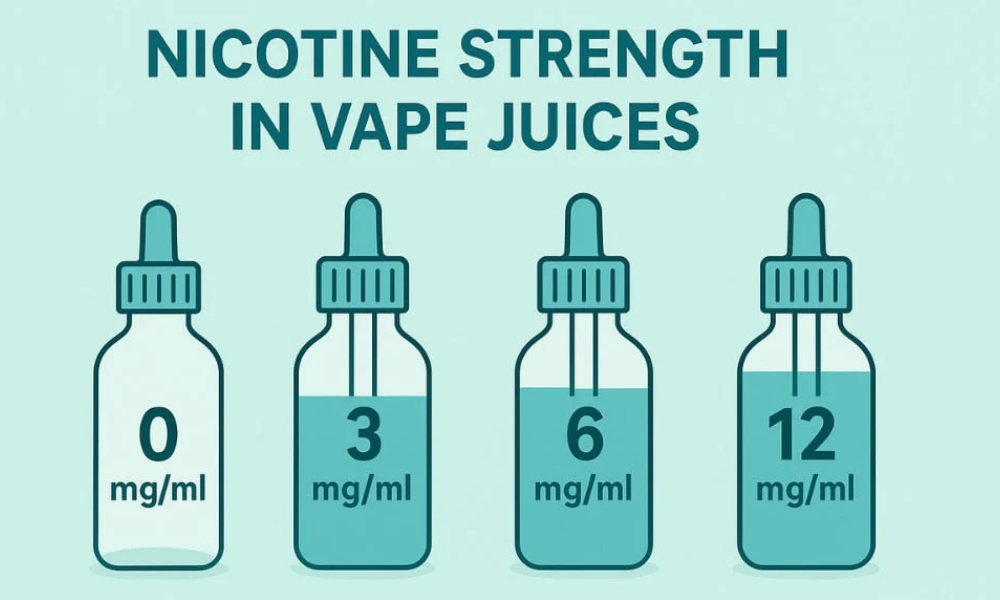
Choosing the right nicotine strength is an important part of finding an e-liquid that suits your vaping setup. Nicotine strength is usually shown in milligrams per millilitre (mg/ml), such as 3mg, 6mg or 10mg. The right option can depend on the type of device you use, your preferred vaping style and whether you use freebase nicotine or nicotine salts.
There is no single nicotine strength that works for every adult vaper. A lower-powered pod can deliver nicotine differently from a high-powered vape, so the number printed on the bottle should not be considered in isolation. Device power, coil resistance, puff duration and vaping frequency can all influence nicotine delivery.
What Does Nicotine Strength Mean?
Nicotine strength tells you how much nicotine is contained in each millilitre of e-liquid. For example, a 10mg/ml e-liquid contains 10 milligrams of nicotine per millilitre. This measurement is useful when comparing different e-liquids and understanding what you are buying.
Nicotine strength is separate from flavour strength. A strong-tasting e-liquid does not necessarily contain more nicotine, while a smooth-tasting e-liquid can still have a higher nicotine concentration. Always check the nicotine level shown on the product packaging before making a purchase.
Why Does Choosing the Right Strength Matter?
Using an e-liquid that does not suit your vaping setup can affect the overall experience. A strength that feels too high may provide an unpleasantly strong nicotine sensation, while a strength that feels too low may not provide the experience you expect. Device power, coil resistance, puff duration and frequency can all influence nicotine delivery.
This is why simply choosing a higher strength is not always the best approach. A high-powered device can produce considerably more vapour per puff than a small pod, meaning the same e-liquid concentration can provide a different experience. Your device and vaping style should therefore be considered together when selecting nicotine strength.
Nicotine Salts vs Freebase Nicotine
The type of nicotine in your e-liquid is another factor to consider. Freebase nicotine is the traditional form used in e-liquids and is often associated with a more noticeable throat hit, particularly at higher strengths. Lower-strength freebase e-liquids are commonly used with traditional starter kits and higher-powered devices.
Nicotine salts are formulated differently and are generally smoother at higher concentrations. They are commonly available in several strengths and are widely used with lower-powered pod devices. The smoother sensation does not mean that the nicotine concentration is lower, so always check the actual mg/ml figure on the bottle rather than judging strength by throat sensation alone.
Choosing Nicotine Strength for Pod Vapes
Pod systems are commonly designed for lower-power vaping and mouth-to-lung inhalation. Because of this, nicotine salts are frequently paired with pod devices, particularly when users want a higher nicotine concentration without a strong throat sensation. Many pod e-liquids are available in different nicotine strengths to suit individual preferences.
However, not every pod requires the same e-liquid. Some devices are designed for lower nicotine strengths or different VG/PG ratios, so you should always check the manufacturer's specifications. Coil resistance and recommended wattage can also affect how much vapour and nicotine you receive from each puff.
Choosing Nicotine Strength for Sub-Ohm Vapes
Sub-ohm devices generally operate at higher power and produce more vapour than compact pod systems. For this reason, lower-strength freebase e-liquids are commonly used with these setups. Strengths such as 3mg and 6mg are frequently associated with higher-powered devices and direct-to-lung vaping.
Using a high-strength nicotine e-liquid in a powerful device may provide considerably more nicotine per puff than intended. The important point is not simply the nicotine concentration but how that concentration interacts with the device's power, coil and airflow. Always follow the manufacturer's recommended e-liquid specifications for your particular vape.
What Is the Difference Between 3mg, 6mg and 10mg?
A 3mg e-liquid contains 3mg of nicotine per millilitre, while 6mg contains 6mg/ml. These lower strengths are commonly associated with freebase e-liquids and higher-powered vaping setups. The difference between them is the concentration of nicotine in the liquid, not the flavour or quality of the product.
A 10mg e-liquid contains 10mg/ml and can be found in nicotine salt formulations designed for compatible lower-powered devices. Rather than treating these figures as a simple progression from weak to strong for every device, consider them alongside your vape's power and coil specifications.
How Vaping Habits Affect Your Choice
Your vaping frequency can also influence which strength feels appropriate. Someone who takes occasional puffs may experience an e-liquid differently from someone who vapes frequently throughout the day. Puff duration and the amount of vapour produced can also influence nicotine exposure.
For this reason, nicotine strength should be considered together with your device and normal vaping pattern. If you change from a low-powered pod to a high-powered device, the same e-liquid may feel noticeably different. Similarly, moving from freebase to nicotine salts can change the throat sensation even when the labelled nicotine concentration is similar.
Signs Your Nicotine Strength May Be Too High
An e-liquid that feels excessively strong may produce an unpleasant nicotine sensation or make vaping uncomfortable. A harsh throat sensation can also be caused by the nicotine formulation, PG/VG ratio, flavouring or vaping settings, so it is not always possible to identify the cause from throat sensation alone.
If an e-liquid feels too strong, check the nicotine concentration and make sure it is suitable for your device. Do not increase nicotine strength simply because the vape does not feel strong enough, and avoid using more nicotine than recommended for your device or product.
Signs Your Nicotine Strength May Be Too Low
Some adult vapers may find that a lower nicotine concentration does not provide the experience they are looking for. However, this does not necessarily mean that increasing the strength is the only solution. Device power, coil resistance, airflow and puffing behaviour can all change how an e-liquid feels.
Before changing nicotine strength, check whether your device is being used according to the manufacturer's instructions. If you are comparing products through an online vape shop, look at the nicotine concentration, nicotine type, VG/PG ratio and recommended device compatibility rather than choosing purely on flavour or bottle design.
How to Choose the Right Strength
A useful starting point is to identify your device first. If you use a compact, lower-powered pod designed for MTL vaping, compatible nicotine salts may be available in strengths such as 10mg. If you use a higher-powered sub-ohm device, lower-strength freebase e-liquid is commonly used instead. These are general product patterns, not universal rules.
Next, check the manufacturer's recommendations for your coil and device. Consider the nicotine type, concentration and VG/PG ratio together. If you are uncertain, product packaging and manufacturer information are better sources than generic strength charts because different devices can deliver nicotine differently.
Conclusion
Choosing the right nicotine strength involves more than picking a number from a bottle. Consider your device, coil, wattage, vaping style, nicotine type and e-liquid formulation together. Lower-strength freebase liquids are commonly associated with higher-powered devices, while nicotine salts are frequently used in compatible lower-powered pod systems.
Always check the manufacturer's recommendations and the nicotine concentration shown on the packaging. Choosing a suitable strength alongside the correct device and e-liquid can help create a more consistent vaping experience.

 English
 French
 Spanish
 Turkish
 Italiano
 Russian