
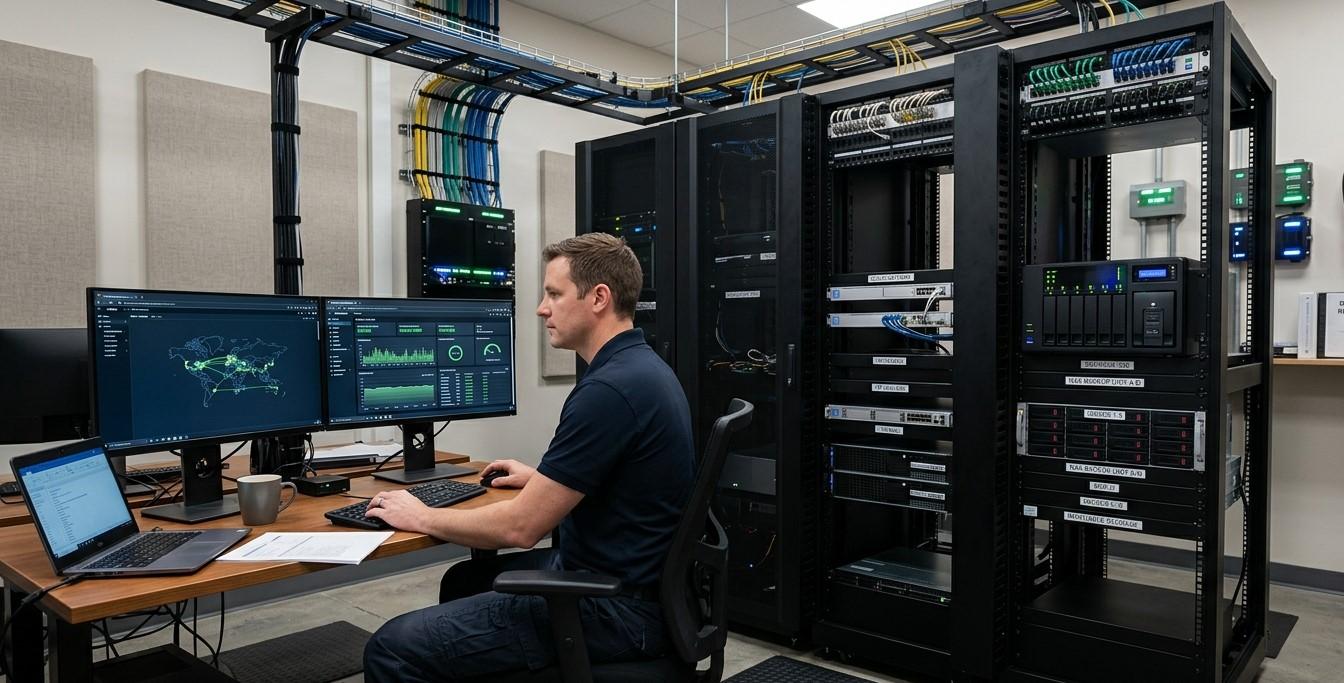
Technology plays an essential role in almost every modern business. Companies depend on computers, networks, cloud applications, servers, communication systems, and digital files to manage daily operations. When technology suddenly becomes unavailable because of a hardware failure, cyberattack, power outage, natural disaster, or other unexpected event, even a small interruption can affect productivity and customer service.
Technology disaster preparedness helps businesses plan for these situations before they happen. Instead of trying to determine what to do during an emergency, businesses can create clear procedures for protecting data, restoring systems, communicating with employees, and continuing essential operations. For organizations searching for Business IT Support Albany, NY, working with an experienced provider such as Precision Fix can also provide valuable assistance with backups, cybersecurity, network support, and IT disaster recovery planning.
What Is Technology Disaster Preparedness?
Technology disaster preparedness is the process of preparing business technology and employees to respond to unexpected disruptions.
A technology-related disaster could involve:
- Hardware failure
- Ransomware or malware
- Data loss
- Server failure
- Network outages
- Internet service disruptions
- Power failures
- Cloud service interruptions
- Accidental data deletion
- Lost or stolen devices
- Natural disasters
- Cybersecurity incidents
The objective is not necessarily to prevent every possible disaster. Instead, businesses should focus on reducing the impact and restoring important systems as quickly and safely as possible.
1. Identify Critical Business Technology
The first step in disaster preparedness is understanding which technology systems are essential to business operations.
Not every application or device has the same level of importance. A business should identify systems that employees need to perform essential tasks.
These may include:
- Business computers
- Email systems
- Accounting software
- Customer databases
- File storage
- Servers
- Network infrastructure
- Cloud applications
- Websites
- Communication platforms
- Payment systems
Once critical systems are identified, businesses can prioritize which technologies need to be restored first during an emergency.
2. Create a Technology Disaster Recovery Plan
A written IT disaster recovery plan gives employees clear instructions about what to do when technology becomes unavailable.
The plan should explain:
- Which systems are considered critical
- Who is responsible for recovery
- Where backups are stored
- How systems should be restored
- Who should contact vendors
- How employees should communicate
- What information needs to be protected
- How recovery priorities are determined
The plan should be easy to understand and accessible even if normal business systems are unavailable.
A recovery plan that only exists in someone's memory can become difficult to use during a stressful situation.
3. Establish Reliable Business Data Backups
Data is one of the most valuable assets a business has. Losing customer information, financial records, documents, or operational data can create serious problems.
Businesses should establish a reliable business data backup strategy that protects important files and systems.
A backup strategy may include:
- Automated backups
- Cloud backups
- Local backups
- Off-site backup copies
- Multiple backup locations
- Protected backup credentials
- Regular backup testing
Businesses should also consider whether backups could be affected by the same incident that damages the primary systems.
For example, keeping the only backup on the same network may not provide sufficient protection against certain ransomware attacks.
4. Test Backups Regularly
Having a backup does not automatically mean that data can be successfully recovered.
Backups can fail because of configuration problems, corrupted files, insufficient storage, expired credentials, or other technical issues.
Businesses should periodically test their backups by restoring selected files or systems.
Backup testing can help verify:
- Data is actually being backed up
- Backups are complete
- Files can be restored
- Recovery procedures work
- Backup credentials remain valid
- Recovery times are acceptable
Regular testing gives businesses greater confidence that their recovery strategy will work when it is needed.
5. Define Recovery Time Objectives
Businesses should determine how quickly critical systems need to be restored.
A Recovery Time Objective (RTO) establishes the maximum acceptable amount of time a system can remain unavailable.
For example, a company may determine that its email system can be unavailable for several hours, while a payment system may need to be restored much sooner.
Establishing recovery priorities helps businesses allocate resources effectively during an incident.
6. Determine Acceptable Data Loss
Businesses should also consider how much recent data they can afford to lose.
A Recovery Point Objective (RPO) helps determine how frequently important data should be backed up.
For example, if a business can only tolerate losing a small amount of recent information, backups may need to occur more frequently.
RTO and RPO requirements should be based on business operations rather than arbitrary technical standards.
7. Strengthen Cybersecurity Before a Disaster Happens
Cybersecurity is an important part of disaster preparedness because cyberattacks can cause major technology disruptions.
Businesses should use multiple security layers, including:
- Multi-factor authentication
- Strong passwords
- Endpoint protection
- Firewalls
- Security updates
- Email filtering
- Access controls
- Network segmentation
- Employee cybersecurity training
A strong small business cybersecurity strategy can reduce the likelihood that a security incident becomes a major business disaster.
8. Protect Backup Systems From Ransomware
Ransomware can potentially encrypt files and connected systems, including some backup environments.
Businesses should therefore consider how backups are protected from unauthorized access.
Backup security may include:
- Separate administrative credentials
- Restricted access
- Multi-factor authentication
- Network segmentation
- Immutable or protected backup options where appropriate
- Regular recovery testing
- Monitoring for suspicious activity
Backup systems should be treated as critical infrastructure rather than ordinary storage.
9. Prepare for Hardware Failures
Disaster preparedness should not focus exclusively on major cyberattacks or natural disasters.
Hardware failures can also interrupt business operations.
Businesses should identify critical equipment and have plans for replacing or restoring failed devices.
This may include:
- Maintaining hardware inventories
- Tracking warranties
- Keeping replacement equipment available
- Maintaining current system configurations
- Documenting important software
- Planning for equipment replacement
A proactive computer maintenance strategy can also help identify hardware problems before they result in unexpected failures.
10. Plan for Internet and Network Outages
Businesses often depend heavily on internet connectivity. An internet outage can prevent employees from accessing cloud applications, communicating with customers, processing transactions, or accessing remote systems.
Businesses should consider whether critical operations require backup connectivity.
Depending on the organization, options may include:
- Secondary internet connections
- Cellular backup
- Redundant network equipment
- Failover systems
- Offline access to essential information
A reliable business network management strategy can help identify network dependencies and potential weaknesses before an outage occurs.
11. Prepare Employees for Technology Emergencies
Employees need to understand what they should do during a technology emergency.
Training should cover situations such as:
- Suspected phishing attacks
- Ransomware warnings
- Lost devices
- Unexpected system access
- Network outages
- Data loss
- Suspicious login notifications
Employees should know who to contact and what actions they should avoid.
For example, employees should not attempt to investigate or delete suspicious files during a potential security incident unless instructed by an appropriate IT professional.
12. Establish an Incident Response Process
A disaster recovery plan focuses on restoring systems, while an incident response process focuses on identifying and responding to the event.
An incident response process should establish:
- How incidents are reported
- Who investigates the problem
- How affected systems are isolated
- Who makes recovery decisions
- How employees are informed
- When outside support is contacted
- How systems are restored
- How the incident is documented
Having these responsibilities defined in advance can reduce confusion during an emergency.
13. Protect Critical Devices and Physical Infrastructure
Physical protection is another part of technology disaster preparedness.
Businesses should consider protecting equipment from:
- Power surges
- Excessive heat
- Water damage
- Dust
- Unauthorized physical access
- Theft
Depending on the environment, businesses may use surge protection, uninterruptible power supplies, secure equipment areas, environmental monitoring, and appropriate physical security controls.
Protecting infrastructure can reduce the risk of avoidable hardware damage.
14. Keep Technology Documentation Current
Accurate technology documentation can make disaster recovery much easier.
Businesses should maintain information about:
- Network layouts
- Hardware
- Software
- Cloud services
- Backup systems
- User accounts
- Vendors
- Internet connections
- Security tools
- Recovery procedures
Documentation should be updated whenever significant technology changes are made.
Without accurate documentation, an IT team may spend valuable time trying to determine how systems are configured before recovery can begin.
15. Review and Update the Disaster Plan
Technology disaster preparedness should not be treated as a one-time project.
Businesses change over time. They may add employees, introduce new applications, move to cloud services, upgrade networks, or replace servers.
Each major technology change can affect the disaster recovery plan.
Businesses should periodically review:
- Backup procedures
- Recovery priorities
- Contact information
- Network documentation
- Security controls
- Hardware inventories
- Vendor information
- Employee responsibilities
Regular reviews help ensure the plan remains relevant.
16. Work With Professional IT Support
Developing and maintaining a technology disaster preparedness strategy can be difficult for small businesses without dedicated IT staff.
Professional IT support for small businesses can help organizations evaluate their infrastructure, identify technology risks, establish backup strategies, improve cybersecurity, document systems, and develop recovery procedures.
Managed IT services can also provide ongoing monitoring and proactive maintenance rather than relying entirely on emergency support.
For businesses looking for Business IT Support Albany, NY, Precision Fix can help with computer systems, network support, cybersecurity, backups, remote IT support, and broader technology management.
FAQs
Why is technology disaster preparedness important for small businesses?
Small businesses often depend heavily on a limited number of technology systems. A single hardware failure, cyberattack, or network outage can therefore have a significant effect on operations. Preparedness helps reduce downtime and improve recovery.
What should a technology disaster recovery plan include?
A plan should identify critical systems, recovery priorities, responsible employees, backup locations, recovery procedures, vendor contacts, communication processes, and important technical documentation.
How often should businesses test their backups?
Businesses should test backups regularly rather than assuming they will work. The appropriate frequency depends on how important the data is and how quickly it changes.
What is the difference between RTO and RPO?
RTO refers to how quickly a system should be restored after an outage. RPO refers to how much recent data loss the business can tolerate and therefore influences backup frequency.
Can managed IT services help with disaster preparedness?
Yes. Managed IT services can provide monitoring, backup management, cybersecurity, maintenance, documentation, and other proactive services that support business continuity and disaster recovery.
Final Thoughts
Technology disasters can happen for many different reasons, from cyberattacks and hardware failures to power outages and accidental data loss. Small businesses cannot always prevent every disruption, but they can prepare for the possibility and reduce its impact.
Reliable backups, cybersecurity controls, disaster recovery planning, employee training, network preparedness, accurate documentation, and regular testing all contribute to a stronger technology disaster preparedness strategy. Businesses should also regularly review their plans as their technology environment changes.
For organizations searching for Business IT Support Albany, NY, Precision Fix can provide support with computer systems, network management, cybersecurity, backups, remote IT support, and ongoing technology maintenance. A proactive approach to disaster preparedness can help businesses protect critical data, reduce downtime, and continue serving customers even when unexpected technology problems occur.

 English
 Spanish
 Deutsch
 Turkish
 Italiano
 Russian