
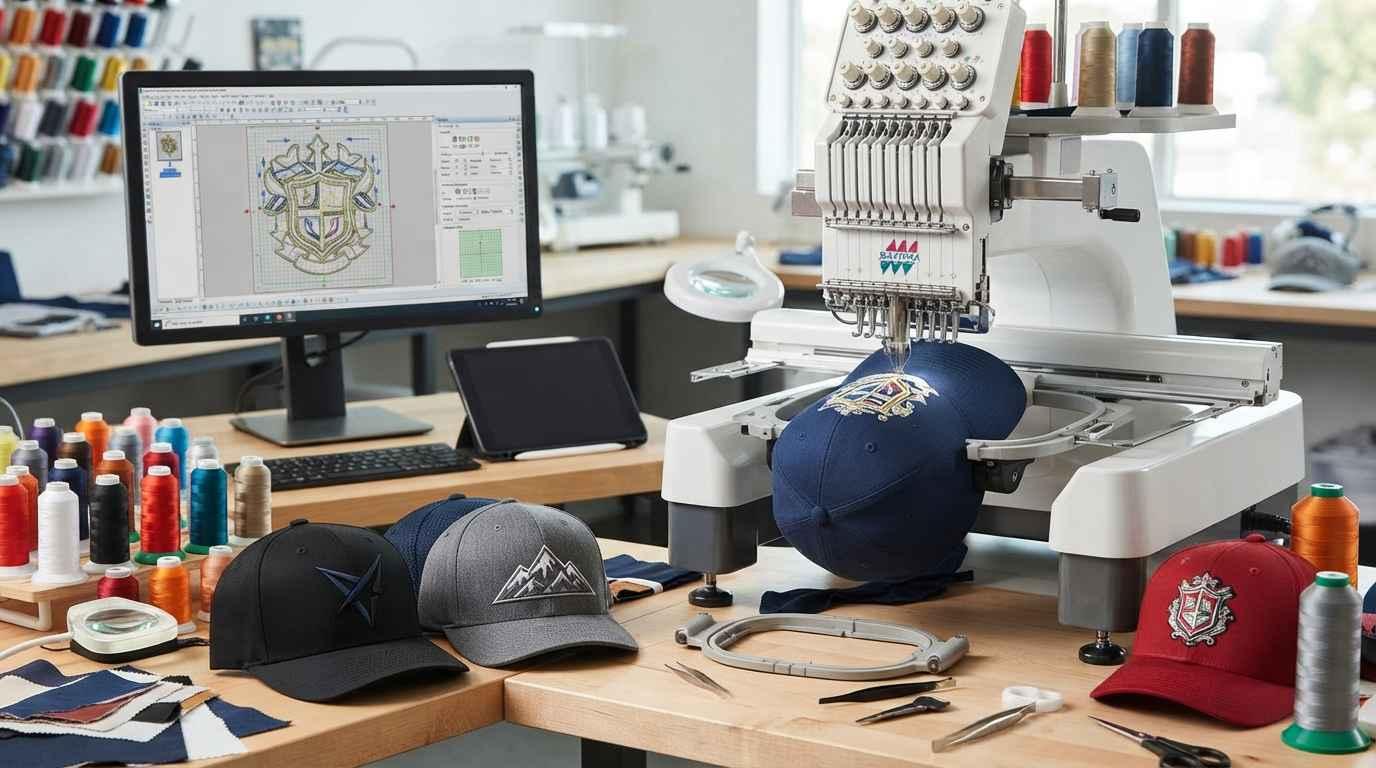
Creating embroidery for caps and hats requires more than simply placing a logo into embroidery software. Curved surfaces, limited design areas, fabric movement, stitch direction, and thread behavior can all affect the finished result. When choosing Best Hat Embroidery Digitizing Services, it is important to understand what a professional digitizing process should provide and how the final embroidery file is prepared for actual machine production.
A well-prepared design should be suitable for the selected hat, embroidery machine, design size, and production requirements. Understanding these factors can help businesses, apparel decorators, and embroidery professionals evaluate digitizing quality before placing an order.
What Are Hat Embroidery Digitizing Services?
Hat embroidery digitizing is the process of converting artwork into a machine-readable embroidery file specifically prepared for caps or hats.
Unlike a flat garment, a hat can have a curved embroidery area. This affects how stitches travel across the design and how the artwork needs to be structured.
A digitizer considers elements such as:
- Hat material
- Design dimensions
- Stitch type
- Stitch density
- Underlay
- Stitch direction
- Thread colors
- Machine requirements
The goal is to create a file that can guide an embroidery machine through the design in an organized and practical sequence.
Understanding the Hat and Its Fabric
Professional digitizing starts with understanding the material being embroidered.
Cotton caps, structured hats, performance fabrics, denim caps, wool-style materials, and other hat fabrics can behave differently during stitching.
Some materials may provide stronger support, while others can stretch, shift, or allow stitches to sink into the surface.
A professional digitizer considers the material when determining stitch density, underlay, and other design settings.
This preparation can help reduce problems such as puckering, poor registration, excessive thread buildup, or weak detail.
Proper Design Size and Placement
Hat embroidery has a limited working area. A design that looks appropriate on a computer screen may not work correctly when enlarged or positioned incorrectly on a cap.
Professional digitizing should account for the available embroidery area and the intended placement of the artwork.
The digitizer may need to adjust proportions, simplify small details, or modify lettering so the design remains readable at its actual production size.
Placement is also important because the center of a cap can have a curved structure that affects how the stitches are formed.
Appropriate Stitch Selection
Different parts of a design may require different stitch types.
Common embroidery stitches include satin stitches, fill stitches, and running stitches. Each has a different purpose and visual effect.
Satin stitches can be useful for borders and lettering, while fill stitches can cover larger areas. Running stitches may be suitable for fine lines and narrow details.
A professional digitizer selects stitch types based on the shape, size, fabric, and desired appearance of each design element.
Using one stitch type throughout an entire design may not provide the best result.
Correct Stitch Density
Stitch density refers to how closely stitches are placed within an area.
Too many stitches can create excessive thread buildup and may make the design stiff. Too few stitches can result in poor coverage and allow the fabric to show through.
The appropriate density depends on factors such as fabric type, thread, design dimensions, and stitch type.
Professional digitizing involves adjusting density according to the actual production requirements rather than applying the same setting to every design.
Underlay for Hat Embroidery
Underlay stitches are placed beneath the visible stitches and can help stabilize the fabric and support the upper layer of embroidery.
For hat designs, proper underlay can be particularly useful because the curved surface and material can affect stitch stability.
The type and amount of underlay should be selected according to the fabric, design structure, and stitch coverage.
Too little support may affect registration, while excessive underlay can contribute to unnecessary bulk.
Managing Stitch Direction
Stitch direction affects both the appearance and behavior of embroidered elements.
Different sections of a design can use different stitch angles to create separation and visual structure.
On a curved hat surface, stitch direction can also influence how the design sits against the fabric.
A professional digitizer plans stitch angles according to the artwork instead of allowing every section to use the same direction.
Clean Stitch Sequencing
The order in which stitches are produced matters.
Poor sequencing can create unnecessary jumps, trims, thread changes, or movement between sections of the design.
Professional digitizing aims to create an efficient stitch sequence that supports the appearance of the design while keeping machine movement practical.
A properly organized sequence can also reduce unnecessary production interruptions.
Clear and Readable Hat Lettering
Small lettering is one of the challenges in hat embroidery.
Text that looks clear in the original artwork may become difficult to read after being converted into stitches, especially when the letters are very small.
Professional digitizing may require adjustments to letter spacing, stroke width, stitch type, or size.
The objective is to preserve the intended wording while making it suitable for embroidery production.
Handling Small Details
Not every detail in a digital logo can be reproduced at a small embroidery size.
Fine lines, tiny gaps, miniature shapes, and subtle graphic elements may need to be simplified.
This does not mean changing the identity of the artwork unnecessarily. Instead, the digitizer evaluates which details can realistically be reproduced with thread.
A professional approach focuses on maintaining the important visual characteristics of the original design within the physical limitations of embroidery.
File Format Compatibility
Embroidery machines use different file formats depending on the machine and production system.
Common embroidery formats include DST, PES, EXP, JEF, and others.
The required format should be confirmed before the digitizing process begins. Providing the correct machine information can help ensure that the final file is prepared appropriately.
A professional service should also communicate clearly about the formats included with the completed order.
What Quality Control Should Include
Before delivering a finished embroidery file, quality control is an important part of the process.
The design should be reviewed for issues such as:
- Incorrect stitch order
- Excessive density
- Poor registration
- Unnecessary jumps
- Improper trims
- Missing elements
- Small lettering problems
- Incorrect thread colors
If possible, the design can also be tested through embroidery simulation or sample stitching before larger production runs.
Communication About the Artwork
A professional digitizing process should involve clear communication.
Important information may include:
- Original artwork
- Desired design dimensions
- Hat type
- Fabric information
- Thread color preferences
- Required machine format
- Placement instructions
- Production deadline
Providing accurate information at the beginning can reduce the need for revisions later.
If an artwork contains elements that may not translate well into embroidery, a knowledgeable digitizer should explain the potential issue and discuss practical adjustments.
Revision and Editing Support
Even carefully prepared artwork may require changes.
For example, a customer may want different dimensions, thread colors, lettering, or design placement.
Revision support can be useful when the original artwork needs adjustments after reviewing a sample.
Before ordering, it is worth checking what revision options are included and whether additional changes involve separate charges.
Turnaround Time
Turnaround time can vary according to design complexity, order volume, required file format, and revision requirements.
Simple designs may require less processing than detailed logos with multiple elements.
A reliable service should provide a realistic timeframe rather than promising an unrealistic delivery schedule.
For urgent projects, customers should communicate the required deadline before the digitizing work begins.
What Professional Results Should Look Like
A properly digitized hat design should be evaluated after stitching, not only by looking at the digital file.
Important visual factors include:
- Clean edges
- Balanced coverage
- Readable lettering
- Consistent shapes
- Appropriate stitch density
- Minimal thread buildup
- Proper registration
- Suitable stitch direction
The final appearance can still vary depending on the hat material, machine settings, thread, needle, and production conditions.
Therefore, the digitizing file is one part of the overall embroidery process.
How to Prepare Artwork for Hat Digitizing
Providing suitable artwork can make the digitizing process more efficient.
A clear logo or high-resolution image is generally easier to interpret than a small, blurry image.
If the original vector artwork is available, it may provide useful information about shapes, outlines, and colors.
It is also helpful to communicate the intended embroidery size and placement before the file is created.
For logos containing very small elements, discussing the final dimensions with the digitizer can help determine whether simplification is necessary.
Choosing a Professional Hat Digitizing Service
When evaluating a service, look beyond turnaround time alone.
Consider whether the provider demonstrates knowledge of embroidery production, offers appropriate file formats, explains design limitations, and provides clear communication about revisions and requirements.
Samples of previous hat embroidery work can also provide useful information about how different designs have been prepared.
The goal is to find a workflow that matches the actual production needs of the project.
Conclusion
The best hat embroidery digitizing services should provide more than a converted embroidery file. A professional process considers fabric, design size, stitch types, density, underlay, stitch direction, sequencing, lettering, machine format, and production requirements.
Before ordering, provide clear artwork and relevant hat specifications, confirm the required file format, and ask about turnaround and revisions. Careful preparation and quality control can help produce embroidery files that are practical for real hat production. EMDIGITIZING can be considered when professional digitizing support is needed for custom hat embroidery projects.
FAQs
Q1. What should I expect from professional hat embroidery digitizing?
You should expect a machine-ready file prepared according to the design size, hat material, stitch requirements, machine format, and intended placement.
Q2. Why does hat embroidery require special digitizing?
Hats have curved surfaces and limited embroidery areas. These characteristics can affect stitch direction, registration, density, and design placement.
Q3. What information should I provide before digitizing a hat logo?
Provide the artwork, desired dimensions, hat type or fabric, placement details, preferred colors, machine format, and deadline when applicable.
Q4. What embroidery file formats are commonly used for hats?
Common formats include DST, PES, EXP, and JEF, although the correct format depends on the embroidery machine and production system.
Q5. Can small text be embroidered on hats?
Small text can be challenging. Letter size, font structure, stitch type, fabric, and design dimensions all affect readability.
Q6. Why is stitch density important for hat embroidery?
Proper density helps balance coverage and thread buildup. Excessive density can create stiffness and bulk, while insufficient density may provide weak coverage.
Q7. Should I provide a vector logo for hat digitizing?
If available, vector artwork can provide clear information about shapes and outlines. However, other high-quality artwork can also be used depending on the project.
Q8. Can a hat embroidery file be revised?
Yes, revisions can be made when changes are needed. Revision policies vary by service, so they should be confirmed before ordering.
Q9. How can I get better results from hat embroidery digitizing?
Provide clear artwork, accurate dimensions, fabric information, placement instructions, and the correct machine format. A sample stitch-out can also help identify adjustments before larger production.

 English
 French
 Deutsch
 Turkish
 Italiano
 Russian