
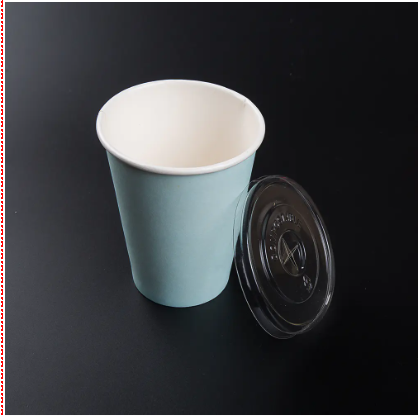
Effective composting of compostable lids requires specific conditions to ensure the proper breakdown of the materials into compost. Here are the key conditions necessary for the successful composting of compostable lids:
Industrial Composting Facilities:
Ideal Condition: Compostable lids are typically designed for composting in industrial composting facilities where conditions are carefully controlled.
Temperature: Industrial composting facilities maintain higher temperatures (usually between 120 to 160 degrees Fahrenheit or 49 to 71 degrees Celsius) compared to home composting, accelerating the decomposition process.
Microbial Activity:
Ideal Condition: Effective composting relies on the activity of microorganisms (bacteria, fungi) that break down organic materials.
Ingredients: Compostable lids should be mixed with other compostable materials, such as food waste and yard trimmings, to provide a diverse nutrient source for microorganisms.
Aeration and Oxygen:
Ideal Condition: Oxygen is essential for aerobic composting, which is the preferred process for compostable materials.
Turning or Mixing: Regular turning or mixing of the compost pile ensures proper aeration and helps distribute oxygen, promoting aerobic decomposition.
Moisture Content:
Ideal Condition: Composting requires an optimal moisture content to support microbial activity.
Balanced Moisture: The compost pile should be kept moist but not waterlogged. Adequate moisture promotes the breakdown of materials without hindering aeration.
Particle Size:
Ideal Condition: Compostable lids and other materials should be shredded or broken into smaller pieces to speed up decomposition.
Increased Surface Area: Smaller particle sizes provide more surface area for microbial colonization, accelerating the composting process.
Carbon-to-Nitrogen Ratio (C/N Ratio):
Ideal Condition: A balanced C/N ratio (between 25:1 and 30:1) is crucial for effective composting.
Addition of Greens and Browns: Compostable lids (high in carbon) should be balanced with "greens" (nitrogen-rich materials like food scraps) and "browns" (carbon-rich materials like leaves) to achieve the right C/N ratio.
pH Level:
Ideal Condition: The pH level of the compost should be within a neutral to slightly acidic range.
Adjustment if Needed: Some compostable materials may impact pH. Adjustments can be made by adding lime (to raise pH) or sulfur (to lower pH) if necessary.
Time:
Ideal Condition: Composting is a natural process that takes time. Industrial composting facilities have controlled conditions that expedite the process.
Patience: Home composting may take longer, and users should be patient, turning the compost regularly and maintaining optimal conditions.
Exclusion of Contaminants:
Ideal Condition: Contaminants, such as non-compostable plastics, should be excluded from the composting process.
Proper Sorting: Proper sorting of compostable materials ensures that only suitable items enter the composting stream.
Tel: +86-579-8321-9217
E-mail: inquiry@welchmat.com
Address: No.168 Shuanglin South Street, Qiubin Subdistrict, Wucheng District, Jinhua, Zhejiang

 English
 French
 Spanish
 Turkish
 Italiano
 Russian