
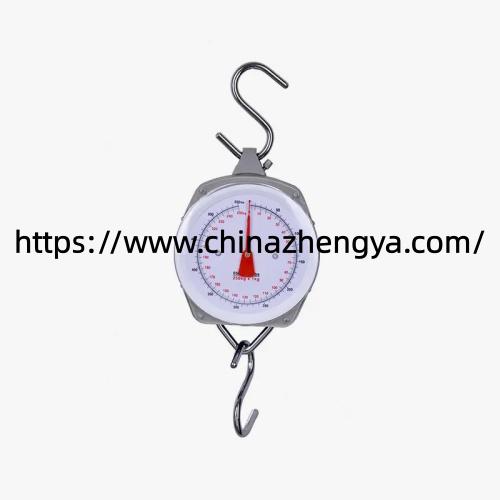
Mechanical Hanging Scale capacity is an important consideration when buyers select weighing equipment for daily operations. Choosing a suitable capacity helps businesses match their equipment to the loads they handle, the readings they require, and their working conditions. Nengzhi provides weighing equipment options for buyers who need to compare product specifications before making purchasing decisions for retail, agricultural, warehouse, and workshop applications.
Before requesting a quotation, buyers should identify the types of items they intend to weigh. A small agricultural supplier may handle baskets of vegetables, while a workshop may need to weigh metal parts or packaged components. These tasks involve different load ranges and working conditions. Recording the usual load, the heaviest expected item, and the frequency of use gives purchasing teams a clearer starting point.
The rated capacity indicates the maximum load an instrument is designed to measure under its specified conditions. Buyers should not select a model based only on the average weight of their products. Occasional heavier items, containers, and other suspended accessories may affect the total load. Reviewing these details helps buyers identify an appropriate capacity range and avoid placing unnecessary demands on the equipment.
However, choosing a larger capacity does not automatically mean a product will suit every weighing task. Buyers should also consider readability, which refers to the smallest increment shown on the dial. Equipment designed for heavier loads may have larger graduations than models intended for lighter items. When a business handles products with varying weights, comparing both specifications can help determine whether a particular model fits its daily requirements.
Consider a distributor supplying equipment to farms and local markets. Customers may weigh produce, feed, packaged goods, or other materials in different quantities. A suitable model should accommodate the expected load while providing readings that users can interpret clearly. Buyers can ask the manufacturer to provide the capacity range, dial divisions, and recommended applications for each available configuration. This information makes product comparisons more practical than relying on appearance alone.
Construction and suspension components also deserve attention. The body, hook, connecting parts, and internal mechanism should be appropriate for the intended operating environment. Buyers should confirm the materials used, the dimensions of the attachment points, and the product instructions for installation and handling. If the equipment will be used in a damp or dusty location, they should ask about relevant environmental limitations rather than assuming every model is suitable for those conditions.
The intended lifting arrangement is equally important. The rated limits of the lifting device, connectors, attachments, and weighing instrument must all be respected. The permitted load is governed by the applicable limits of the complete arrangement, not simply the number printed on the weighing instrument. Operators should follow the manufacturer's instructions, prevent sudden loading, and avoid standing beneath suspended goods. Appropriate training and inspections remain essential for safe operation.
Buyers should also review how readings will be used. For routine inventory checks, a clear dial and an appropriate graduation interval may meet the intended needs. Where measurements determine selling prices or support regulated transactions, additional verification or certification requirements may apply. These requirements vary by market and application. Importers should confirm the relevant local rules and request supporting documentation before placing an order for resale.
Maintenance is another consideration when comparing products. Regular inspection can help identify worn hooks, damaged components, loose connections, or changes in reading behavior. Buyers should ask how the unit should be checked, whether adjustment or calibration services are available, and how replacement parts can be obtained. A clear maintenance schedule can help distributors explain operating responsibilities to their customers and plan support after delivery.
For wholesale orders, commercial details should be reviewed alongside technical specifications. Confirm available capacity options, minimum order quantities, packaging requirements, production schedules, and delivery arrangements. If several configurations are being considered, requesting a product specification sheet for each model can make comparisons easier. Buyers should also discuss labeling and documentation needs when preparing products for different markets.
Selecting equipment according to actual loads, required readability, operating conditions, and maintenance expectations helps businesses make informed purchasing decisions. Nengzhi supports buyers who want to discuss product configurations and wholesale supply requirements for their intended applications. Visit https://www.chinazhengya.com/product/ to review the available product range and contact the manufacturer about specifications that fit your business needs.

 English
 French
 Spanish
 Turkish
 Italiano
 Russian