
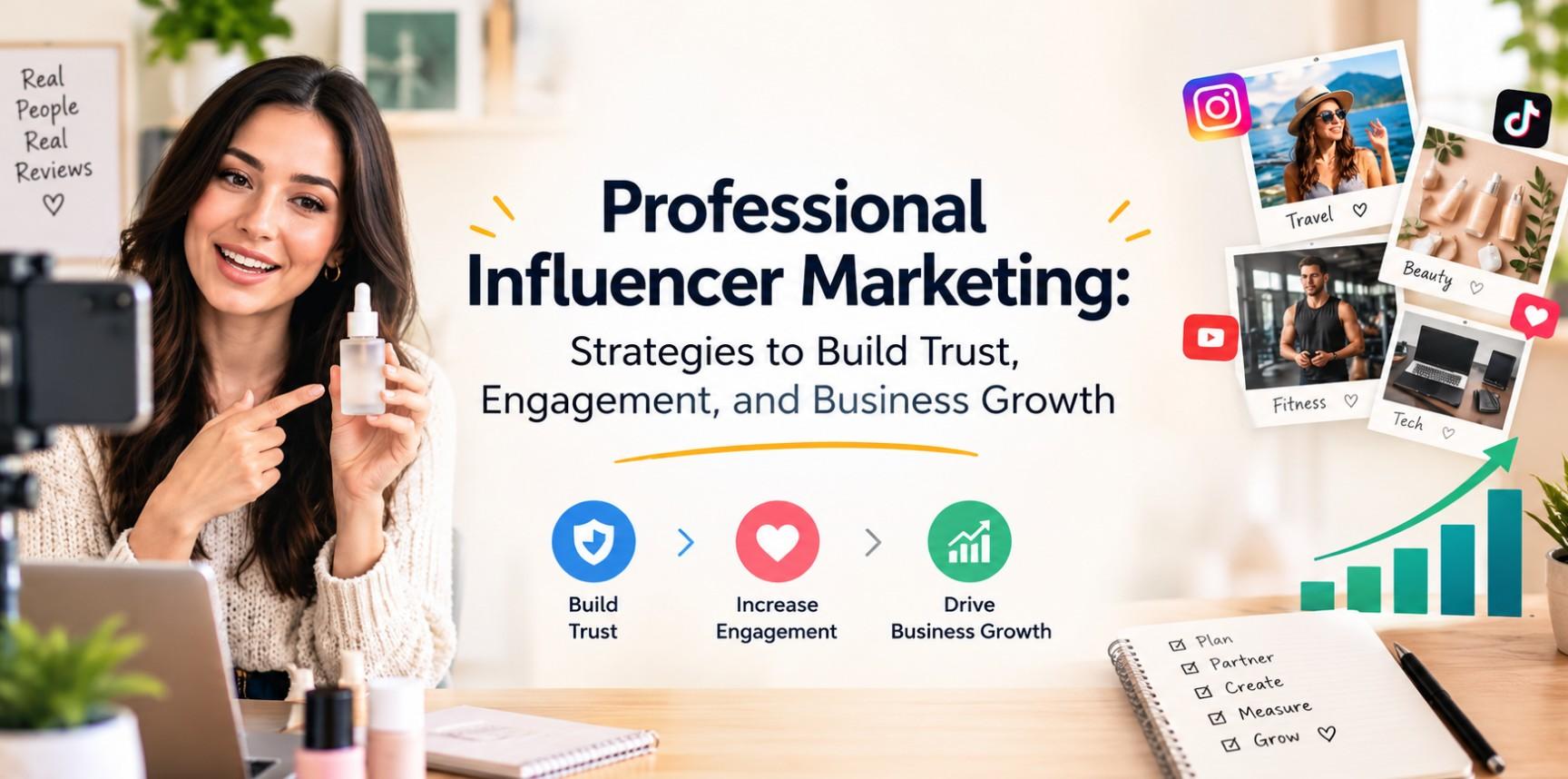
Social media has changed how people discover products, evaluate services, and make purchasing decisions. Consumers increasingly value recommendations from creators they follow because these individuals often share relatable experiences, personal opinions, and useful information.
For businesses, this creates an opportunity to connect with potential customers through professional influencer marketing. However, successful influencer marketing involves much more than paying someone with a large following to promote a product.
It requires careful planning, relevant partnerships, creative storytelling, and consistent performance measurement. When these elements work together, influencer campaigns can strengthen brand awareness, build credibility, and support long term business growth.
What Is Professional Influencer Marketing?
Professional influencer marketing is a strategic approach to collaborating with content creators who can influence the opinions and purchasing decisions of a specific audience. These creators may specialize in fashion, beauty, technology, fitness, travel, lifestyle, or other industries.
Unlike traditional advertising, influencer marketing often introduces products through content that feels natural to the creator's usual style. This might include product demonstrations, honest reviews, tutorials, short videos, or everyday experiences.
The professional aspect comes from treating each collaboration as a business initiative with clear objectives, defined responsibilities, appropriate budgets, and measurable outcomes. Rather than focusing exclusively on visibility, businesses should consider how influencer partnerships contribute to audience trust, customer acquisition, and overall marketing performance.
Why Influencer Marketing Matters for Modern Businesses
Consumers encounter countless advertisements every day, making it increasingly difficult for businesses to capture attention. Influencers help address this challenge by creating content for communities that already share specific interests.
A creator who regularly discusses skincare, for example, may have an audience actively seeking beauty advice. A relevant recommendation can introduce a product to people who are more likely to consider it.
Influencer marketing can support several business objectives. It can introduce a new product, increase engagement on social media, generate website traffic, encourage product trials, and provide fresh creative material for advertising campaigns.
It also helps businesses understand their audiences. Comments, questions, shares, and saves can reveal customer concerns, preferences, and buying motivations. These insights can inform future content and broader marketing decisions.
Choosing Right Influencers for Your Campaign
Selecting suitable creators is one of the most important steps in professional influencer marketing. A large follower count does not automatically translate into meaningful results. Audience relevance, credibility, content quality, and engagement are often more valuable indicators.
Businesses should begin by identifying their target customers and understanding which platforms those customers use. They can then evaluate creators according to their niche, audience demographics, communication style, and previous collaborations.
Micro influencers can be particularly valuable because they often serve focused communities and maintain closer relationships with their followers. Larger creators may be better suited to campaigns that prioritize broad awareness. The right choice depends on the campaign objective rather than popularity alone.
It is also important to examine audience authenticity. Unusual engagement patterns, repetitive comments, or a significant mismatch between follower numbers and genuine interaction may indicate potential concerns. Reviewing several recent posts provides a clearer picture of a creator's influence and consistency.
Creating Authentic and Engaging Influencer Content
Effective influencer content should communicate the intended message without losing the creator's individual voice. Audiences can quickly recognize content that feels overly scripted or disconnected from a creator's usual style.
Businesses should provide clear campaign objectives, essential product information, approved claims, and practical guidelines. Within those boundaries, creators should have enough freedom to communicate naturally with their audiences.
Different formats can serve different purposes. Short videos can capture attention, tutorials can demonstrate product benefits, and detailed reviews can help potential customers evaluate their options. Interactive stories and question sessions can encourage conversations and address common concerns.
Authenticity also requires transparency. Paid partnerships, gifted products, and other commercial relationships should be disclosed clearly in accordance with applicable advertising regulations and platform policies. Honest communication protects consumer trust and supports responsible marketing practices.
Measuring Influencer Marketing Performance
A professional campaign needs clear performance indicators established before publication. Without defined goals, businesses may struggle to determine whether their investment produced meaningful results.
For awareness campaigns, useful metrics include reach, impressions, video views, and audience growth. Engagement focused campaigns may prioritize comments, shares, saves, and meaningful interactions. Sales focused campaigns should examine referral traffic, conversions, customer acquisition costs, and return on advertising spend where applicable.
Tracking links, campaign specific discount codes, and dedicated landing pages can help businesses understand which partnerships generate results. However, attribution should be interpreted carefully because customers may encounter several marketing messages before purchasing.
Regular reporting allows marketers to identify strong performers, improve creative approaches, and allocate budgets more effectively. The objective is not simply to collect numbers but to turn performance data into better decisions.
Integrating Influencer Marketing With a Wider Strategy
Influencer campaigns generally perform better when they support a coordinated marketing plan. Organic social media, paid advertising, content production, email marketing, and website experiences can work together to guide customers from discovery to purchase.
For example, a creator's video may introduce a product to new audiences. The business can then use approved creator content in paid campaigns, where permitted, to reach relevant prospects. Helpful website content and clear product information can support customers who want to learn more before buying.
Long term partnerships may also create greater consistency than isolated promotions. When creators genuinely connect with a product, repeated collaborations can help audiences understand its benefits and develop familiarity over time.
Frequently Asked Questions
1. What makes professional influencer marketing effective?
It combines relevant creator selection, authentic content, clear campaign objectives, audience understanding, and consistent performance measurement. Each partnership should support a defined business goal.
2. Are micro influencers suitable for small businesses?
Yes. Micro influencers can offer access to focused audiences and specialized communities. Their suitability depends on audience quality, engagement, industry relevance, and campaign budget.
3. How much should a business spend on influencer marketing?
Costs vary according to creator reach, content requirements, campaign duration, usage rights, and exclusivity. Businesses should establish a realistic budget based on their objectives and expected returns.
4. How long does it take to see results from influencer marketing?
Initial engagement and visibility may appear soon after publication, while stronger brand recognition and customer trust generally require repeated exposure. Sales results depend on the product, audience, offer, and purchasing journey.
Conclusion
Professional influencer marketing is most effective when creativity and commercial strategy work together. By selecting relevant creators, encouraging authentic storytelling, measuring meaningful outcomes, and integrating campaigns with wider marketing activities, businesses can build stronger audience relationships and improve their marketing performance. The real value lies not in reaching the largest possible audience, but in connecting with the right people through credible voices and useful content.

 English
 Spanish
 Deutsch
 Turkish
 Italiano
 Russian