
The printing industry offers numerous opportunities for businesses providing commercial printing, packaging, promotional materials, labels, and customized marketing products. However, finding customers who genuinely need these services can be challenging. Many printing companies invest time and money in marketing but struggle to generate qualified inquiries or secure profitable contracts.
One common reason is that businesses fail to connect with the professionals responsible for purchasing printing services. Reaching general company inboxes or contacting individuals who have no purchasing authority can lead to wasted effort and missed opportunities.
A more focused approach to business-to-business (B2B) marketing can help printing companies identify suitable prospects and develop meaningful business relationships. By understanding their target customers, researching decision-makers, and creating relevant outreach campaigns, printing businesses can improve their chances of winning new contracts.
Understanding the Printing Industry's B2B Market
The printing industry serves a diverse range of businesses. From small organizations ordering promotional materials to large manufacturers requiring packaging and product labels, different customers have different printing needs.
Commercial printing companies may provide brochures, catalogs, business cards, and marketing materials. Packaging businesses often work with manufacturers, retailers, and food producers that need attractive and functional packaging. Publishers require printing services for books, magazines, and other publications, while educational institutions may purchase printed learning materials and administrative documents.
Identifying these potential customers is the first step toward building an effective lead generation strategy.
Printing businesses should consider which industries align with their capabilities. For example, a company specializing in product packaging may find more relevant opportunities among manufacturers and consumer goods businesses than among organizations seeking occasional business cards.
Understanding a prospect's industry, company size, purchasing needs, and potential order volume can help sales teams prioritize their efforts. Instead of contacting every available business, they can concentrate on organizations that are more likely to require their services.
Why Reaching the Right Decision-Makers Matters
Even when a company needs printing services, reaching the appropriate contact can make a significant difference. Purchasing decisions may involve procurement managers, marketing directors, operations managers, business owners, or product development teams.
A marketing director might oversee promotional materials, while a procurement manager may compare suppliers, negotiate pricing, and coordinate purchasing agreements. In a smaller organization, the business owner may handle these responsibilities directly.
Understanding these roles helps printing companies direct their messages toward professionals who can evaluate their offerings or introduce them to the relevant purchasing team.
For example, a printing company offering customized product packaging could approach a marketing manager at a consumer goods business. Its message might explain how professionally designed packaging can support product presentation and brand consistency.
Relevant communication is more likely to attract attention than a generic sales pitch. By demonstrating an understanding of a prospect's requirements, printing companies can begin conversations that may eventually lead to long-term contracts.
How a Printing Industry Email List Can Support Lead Generation
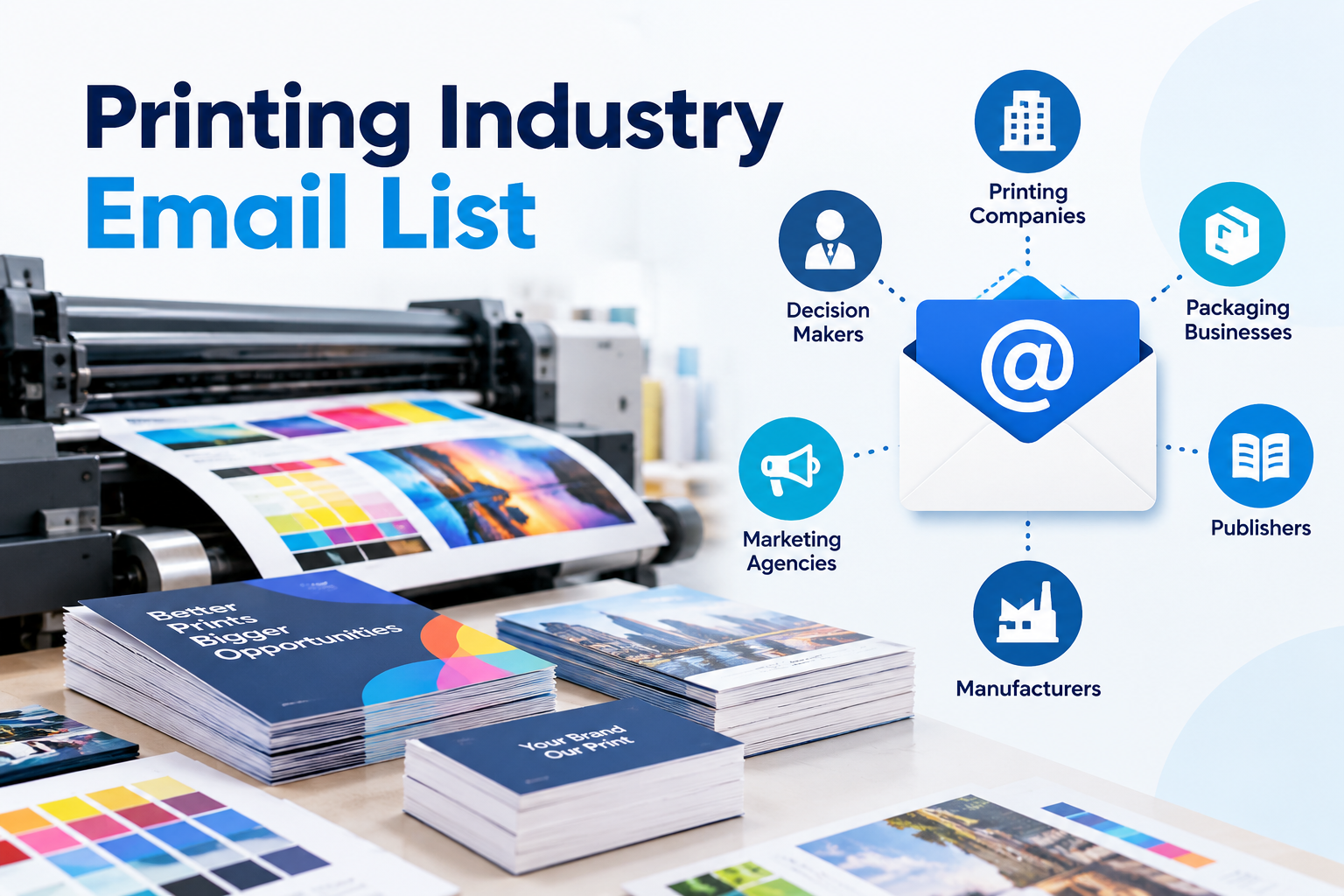
A Printing Industry Email List can serve as a resource for businesses seeking relevant professional contacts within the printing sector. Depending on its coverage, such a database may include company information, business email addresses, professional roles, and industry classifications.
These details can help marketers organize prospects according to their business needs and identify contacts who may be relevant to their services.
For instance, a supplier of printing equipment could focus on commercial printing businesses, while a company offering packaging solutions might prioritize manufacturers and packaging professionals.
However, contact data alone does not guarantee successful lead generation. Businesses should evaluate whether the information is current, accurate, relevant to their target audience, and collected and supplied in accordance with applicable privacy and marketing requirements.
Before launching a campaign, marketers should verify important contact details and confirm that their planned communications comply with relevant laws and email-provider policies. They should also respect unsubscribe requests and avoid sending messages to individuals who have not provided the necessary permission where required.
Used responsibly, targeted contact information can help businesses organize their outreach and spend more time engaging with relevant prospects.
Five Practical Ways to Turn Printing Prospects into Contract Opportunities
1. Define Your Ideal Customer
Start by identifying the types of organizations most likely to benefit from your printing services. Consider their industries, locations, company sizes, and typical purchasing requirements.
A business specializing in high-volume packaging may target manufacturers with recurring product orders. A company producing promotional merchandise may focus on marketing agencies, event organizers, and corporate marketing departments.
A clearly defined customer profile makes it easier to identify promising opportunities and develop relevant sales messages.
2. Research the Decision-Makers
Once you identify suitable companies, determine who manages their printing requirements. Review company websites, professional business profiles, and publicly available information to understand relevant roles.
Avoid assuming that every company follows the same purchasing structure. Some organizations use centralized procurement teams, while others allow individual departments to select suppliers.
Knowing whom to contact helps you direct your proposal appropriately and reduces unnecessary communication.
3. Personalize Your Outreach
Generic messages rarely explain why a printing company is a suitable choice. Instead, tailor your communication to the prospect's industry and potential requirements.
For example, a packaging manufacturer might appreciate information about material options, production capacity, and quality control. A marketing agency may be more interested in creative flexibility, turnaround times, and consistent print quality.
Keep the initial message concise. Introduce your business, explain why your service may be relevant, and suggest a simple next step, such as reviewing a portfolio or discussing an upcoming project.
4. Showcase Your Business Value
Printing buyers often evaluate more than the lowest price. They may also consider reliability, print quality, delivery schedules, customization options, and the ability to handle repeat orders.
Explain how your business addresses these priorities. If you offer specialized printing capabilities, demonstrate them through relevant examples. If your production process supports consistent quality or dependable delivery, communicate those advantages clearly.
Case studies, product samples, and customer testimonials can help establish credibility, provided they accurately represent your work.
5. Follow Up Professionally
A prospect may not respond to your first message because they are busy, evaluating suppliers, or waiting for an upcoming project.
A thoughtful follow-up can keep the conversation open. Reference your original message, provide useful additional information, and give the recipient an easy way to respond.
Avoid excessive follow-ups or repeated unsolicited messages. If someone declines or asks not to receive further communication, respect that request.
Building a professional relationship takes time. Consistent, considerate communication can help printing companies remain memorable when a relevant purchasing opportunity arises.
Common B2B Printing Outreach Mistakes to Avoid
Several mistakes can weaken a lead generation campaign, even when the business has a strong product or service.
First, contacting unrelated companies creates unnecessary work and reduces the relevance of your message. Focus on organizations with genuine potential to benefit from your printing capabilities.
Second, using inaccurate or outdated contact information can result in undelivered emails and wasted resources. Regularly review and verify your contact records.
Third, relying exclusively on price can make your business appear interchangeable with competitors. Explain the practical benefits of your services, including quality, dependable production, and customer support.
Finally, neglecting email compliance can damage your reputation and create legal risks. Follow applicable marketing and privacy laws, use appropriate consent practices, identify your business clearly, and provide a straightforward way to opt out of marketing communications.
Measuring Your Printing Lead Generation Results
A successful outreach strategy should be evaluated using meaningful performance indicators. Track how many messages are successfully delivered, how many prospects respond, and how many conversations result in qualified inquiries or sales opportunities.
Pay attention to which industries generate the most relevant responses. If packaging businesses show stronger interest than other segments, you may want to refine your targeting and develop more specialized messaging.
Also monitor the quality of opportunities rather than focusing solely on the number of contacts reached. A small number of qualified prospects with genuine purchasing needs may be more valuable than a large volume of unrelated inquiries.
Review campaign results regularly and use those insights to improve your customer profiles, messaging, and follow-up process.
Conclusion: Build Better Connections and Win More Printing Contracts
Winning printing contracts requires more than offering competitive services. Businesses must understand their potential customers, identify the professionals responsible for purchasing decisions, and communicate their value effectively.
A printing industry database may help organize relevant business contacts, but successful lead generation depends on accurate information, appropriate targeting, responsible outreach, and professional relationship building.
By defining their ideal customers, personalizing communication, demonstrating their capabilities, and measuring campaign performance, printing companies can develop a more focused approach to finding new business.
Ultimately, better-targeted conversations can help printing businesses discover promising opportunities, build lasting customer relationships, and compete more effectively in a demanding marketplace.

 English
 French
 Spanish
 Deutsch
 Turkish
 Italiano