
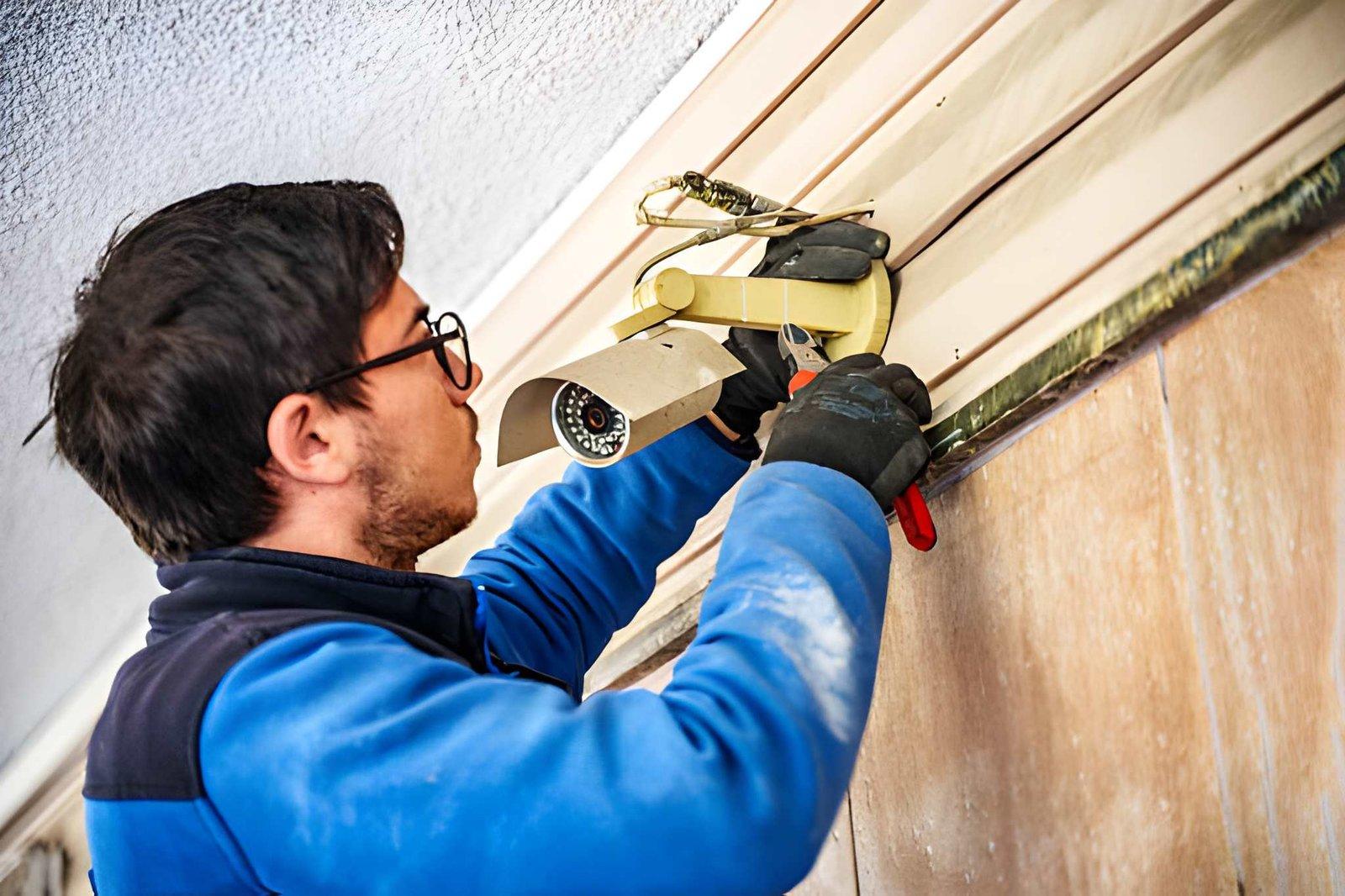
Buying the right cameras is only one part of a working surveillance system. How those cameras get installed, cabled, networked, and commissioned determines whether the system performs as intended or quietly underperforms while still appearing functional on a monitor. In the UAE, where surveillance regulations now specify technical detail down to camera resolution and network encryption, installation quality isn't a finishing touch; it's what determines whether a system actually meets the standard it's supposed to. This guide breaks down what a proper CCTV Installation Services in the UAE should cover heading into the final stretch of 2027, and what tends to get skipped by providers cutting corners.
Installation is a Process, Not an Event
A CCTV system installed properly involves several distinct stages, each of which affects the system's long-term reliability. Skipping or rushing any one of them tends to surface later, usually at the worst possible time, during an actual incident when the footage turns out to be unusable.
Site survey and design. Before any cable is run, a proper installation begins with an assessment of the property: sightlines, lighting conditions at different times of day, entry and exit points, and any regulatory coverage requirements specific to the business type. Camera placement decided from a floor plan alone, without walking the actual site, tends to leave blind spots that only become obvious after installation.
Cabling and infrastructure. Whether the system runs on structured cabling or a wireless configuration, the physical infrastructure needs to be planned for durability, not just convenience. Outdoor runs need appropriate weatherproofing, and cable paths should avoid interference sources that degrade signal quality over time.
Camera mounting and calibration. Correct height, angle, and focus matter as much as the camera specification itself. A high-resolution camera mounted at the wrong angle or without proper exposure calibration for the UAE's intense daylight and glare can produce footage that's technically high-definition but practically useless.
Network configuration and security. Every camera on a network is a potential entry point if not properly secured. Installation services now need to include encrypted connections, secured remote access, and correct network segmentation, since an exposed recorder or camera feed is treated as a genuine vulnerability, not just a technical afterthought.
Testing and commissioning. A system should be tested as a whole after installation, not assumed to work because each individual camera powers on. That includes verifying footage quality under actual lighting conditions, confirming storage and retention settings, and checking that alerts and remote access function as intended.
Documentation and compliance sign-off. For commercial properties in particular, installation isn't complete until the system is documented against the relevant regulatory standard, whether that's SIRA in Dubai or the equivalent authority elsewhere in the Emirates, with proof that coverage, footage retention, and technical specifications meet the required benchmark.
Why DIY or Budget Installation Often Costs More Later
It's entirely possible to buy consumer-grade cameras and self-install a basic system in a UAE villa or small office. Where this tends to fall short is in exactly the areas a professional installation service is built around: proper site-specific placement, correctly rated outdoor hardware, secured network configuration, and documentation that satisfies regulatory requirements for commercial properties. A self-installed or poorly commissioned system might look identical to a professionally installed one on a monitor, right up until footage is actually needed for an incident, an insurance claim, or a compliance inspection, at which point gaps in coverage, weak network security, or missing documentation become expensive problems rather than minor inconveniences.
Residential vs. Commercial Installation Scope
A villa or apartment installation is typically narrower in scope: a handful of cameras covering entry points and communal areas, straightforward remote viewing setup, and integration with any existing smart home system. Commercial installation services carry considerably more weight, covering formal coverage requirements tied to business licensing, retention schedules specific to the property's risk category, and often integration with access control and alarm systems as part of a single coordinated project. Applying a residential-scale installation approach to a commercial property, or vice versa, tends to either under-deliver on compliance or over-spend on unnecessary complexity.
What to Ask a CCTV Installation Provider
-
Does the site survey happen in person, or is placement decided remotely from photos or a floor plan alone?
-
What weatherproofing and mounting standards apply to outdoor cameras specifically?
-
How is the network secured, and is remote access encrypted by default rather than as an optional add-on?
-
Is the system formally tested and commissioned after installation, with documented results, or simply switched on and left?
-
For commercial properties, is compliance documentation provided as part of the installation, or treated as a separate, additional service?
A provider who treats these as standard practice, rather than premium extras, is generally the one worth trusting with the actual work.
Where Installation Standards Are Heading
As UAE surveillance regulation continues to formalize technical requirements around resolution, cybersecurity, and coverage, installation quality is becoming as scrutinized as the hardware itself. Systems installed to a lower standard today are increasingly likely to fall short of expectations that are only getting stricter, meaning a poorly executed installation now is more likely to require costly remediation later rather than simply continuing to function adequately.
How Smart Living Technology Handles Installation
We treat installation as the stage where a system's real performance is decided, not a routine final step after equipment is chosen. Every project starts with an in-person site survey, follows through with cabling and mounting standards suited to the UAE's climate and lighting conditions, and closes with formal testing, secured network configuration, and documentation aligned to the relevant regulatory standard. Whether the project is a single villa or a multi-camera commercial rollout, our approach stays consistent: a system that performs correctly from day one and continues to hold up under real conditions well beyond it.
Choosing a CCTV installation service in the UAE isn't just about who can mount a camera fastest. It's about who installs a system that still works exactly as intended when it actually matters.
Frequently Asked Questions
1. What's included in a professional CCTV installation service beyond mounting the cameras?
A proper installation covers site survey and camera placement planning, structured cabling or secure wireless setup, calibration for local lighting conditions, encrypted network configuration, and full testing and commissioning before the system is considered complete.
2. Is a self-installed CCTV system enough for a UAE home or business?
For very simple residential setups it can work, but self-installation often misses site-specific placement, properly rated outdoor hardware, and secured network configuration. For commercial properties, self-installation typically can't meet formal regulatory documentation requirements.
3. Why does camera placement matter as much as camera quality?
A high-specification camera mounted at the wrong angle, height, or without proper exposure calibration for bright daylight and glare can still produce footage that's technically sharp but practically unusable for identifying what actually happened.
4. How is network security handled during CCTV installation?
A properly installed system uses encrypted connections and secured remote access by default, along with correct network segmentation, since an exposed camera or recorder connected to the internet represents a real security vulnerability, not just a technical detail.
5. Do commercial CCTV installations require different documentation than residential ones?
Yes. Commercial properties typically need documented proof that coverage, footage retention, and technical specifications meet the relevant regulatory standard, since compliance is often tied to business licensing, a requirement residential installations don't usually carry.

 French
 Spanish
 Deutsch
 Turkish
 Italiano
 Russian