
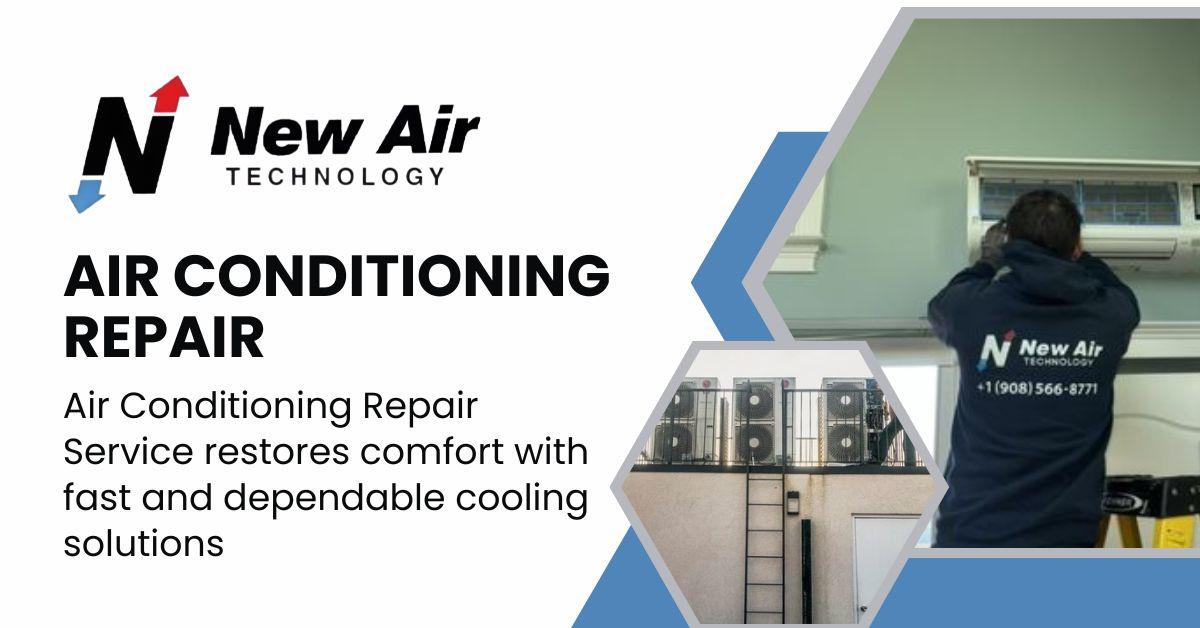
Running a business in Whitehouse Station means dealing with a climate that swings from humid summers to biting winters — and your HVAC system carries that load every single day. Commercial HVAC in Whitehouse Station isn't a "set it and forget it" utility; it's a core piece of infrastructure that determines whether your building is comfortable for employees, safe for customers, and efficient enough to keep operating costs under control. When a rooftop unit fails during a July heatwave or a boiler goes down in January, the disruption reaches far beyond temperature — it touches productivity, inventory, and reputation.
For property managers, restaurant owners, retail operators, and office administrators across Hunterdon County, understanding how commercial systems differ from residential ones is the first step toward avoiding costly downtime. New Air Technology works with businesses throughout the region, and one pattern shows up again and again: the companies that plan ahead on HVAC spend far less, over time, than the ones that wait for a breakdown to force their hand.
Why Commercial HVAC Systems Are Different From Residential Units
A home air conditioner and a commercial rooftop package unit might look similar from a distance, but they're built for entirely different jobs. Commercial systems typically serve larger square footage, run longer duty cycles, and often need to condition multiple zones with different occupancy patterns — a server room, a sales floor, and a break room all have different loads.
That complexity means commercial HVAC in Whitehouse Station has to account for factors residential systems rarely face: code-mandated ventilation rates for occupied spaces, higher electrical demand, and equipment that's frequently mounted on rooftops where it's exposed to weather year-round. New Air Technology designs and services systems with these realities in mind, rather than treating a commercial building like an oversized house.
Signs Your Commercial System Needs Attention
Most equipment failures don't happen without warning. Watch for these indicators before they turn into an emergency call:
-
Uneven temperatures between zones or floors
-
Rising utility bills without a change in usage
-
Unusual noises — grinding, rattling, or repeated short-cycling
-
Weak or inconsistent airflow from vents
-
Frequent tripped breakers tied to the HVAC circuit
-
Visible rust, moisture, or ice buildup on outdoor units
Catching these early is where HVAC repair services in Whitehouse Station earn their value. A technician who identifies a failing capacitor or a refrigerant leak during a routine visit can often resolve it for a fraction of what an after-hours emergency repair would cost.
The Real Cost of Reactive Maintenance
Too many businesses treat HVAC like an appliance they only think about when it breaks. That approach is expensive. Reactive repairs come with rush labor rates, emergency parts sourcing, and — worst of all — the operational cost of a building that isn't functioning properly. A restaurant losing walk-in cooler capacity, a warehouse without climate control for sensitive inventory, an office too hot for staff to work comfortably: each of these scenarios has a dollar figure attached, and it's almost always higher than the cost of prevention.
A structured maintenance plan changes that equation. Scheduled inspections catch wear before it becomes failure, extend equipment lifespan, and keep warranties valid — many manufacturers require documented maintenance to honor coverage. New Air Technology builds maintenance schedules around each building's actual usage pattern rather than applying a generic template, which means the plan reflects how hard your specific system is really working.
When Repair Isn't Enough: Planning for Air Conditioning Replacement in Whitehouse Station
Every commercial AC unit has a service life, and pushing past it usually costs more than it saves. As a system ages, efficiency drops, breakdowns become more frequent, and replacement parts get harder to source. Air conditioning replacement in Whitehouse Station becomes the smarter financial decision once a building starts seeing these patterns:
Age past 12–15 years. Most commercial units are rated for roughly this lifespan under normal use. Past that point, the risk of a major failure rises sharply, and older refrigerants may no longer be readily available or compliant with current regulations.
Repair costs stacking up. If a single repair estimate approaches 30–50% of what a new unit would cost, replacement typically wins on total cost of ownership — especially once you factor in the next likely repair down the line.
Efficiency losses that show up on the utility bill. Newer commercial systems are often dramatically more efficient than units installed even a decade ago. A building's electric bill can drop noticeably after an upgrade, sometimes enough to offset a meaningful share of the installation cost within a few years.
Comfort complaints that repairs can't fix. If certain zones are consistently too hot or too cold no matter how many times a technician adjusts the system, the unit may simply be undersized or mismatched for the space — a problem only a properly specified replacement solves.
That's where New Air Technology's approach to replacement planning matters. Rather than swapping in a like-for-like unit, the team evaluates square footage, occupancy, insulation, and existing ductwork to right-size the new system for the building as it actually operates today — not as it was configured when the original unit went in.
What to Expect From a Commercial Replacement Project
A well-run replacement project follows a predictable sequence, and knowing what's involved helps businesses plan around it:
-
Load calculation and site assessment to determine correct unit sizing.
-
Equipment selection balancing upfront cost against efficiency ratings and expected lifespan.
-
Scheduling around business hours to minimize disruption — often nights, weekends, or phased installs for multi-zone buildings.
-
Ductwork and electrical verification to confirm the new unit integrates cleanly with existing infrastructure.
-
Commissioning and testing before the crew leaves the site, so performance is verified, not assumed.
Businesses that plan replacement proactively — rather than reacting to a mid-summer failure — get more control over timing, budget, and equipment selection. That's a meaningful advantage over scrambling to source a unit during peak season when lead times stretch out.
Comprehensive HVAC Repair Services in Whitehouse Station
Not every issue calls for replacement. Skilled HVAC repair services in Whitehouse Station cover a wide range of problems, and diagnosing the actual root cause — rather than just addressing symptoms — is what separates a lasting fix from a repeat service call.
Common commercial repair needs include:
-
Refrigerant leak detection and recharging
-
Compressor and condenser fan motor repair
-
Thermostat and control board troubleshooting
-
Ductwork inspection for leaks or blockages
-
Electrical component replacement (contactors, capacitors, relays)
-
Airflow balancing across multiple zones
New Air Technology approaches repair calls with diagnostic thoroughness — checking related components rather than stopping at the first fault found, since HVAC issues often have more than one contributing cause. That's especially true in commercial buildings, where one failing part can put unusual strain on the rest of the system.
Building a Preventive Maintenance Plan That Actually Works
An effective plan isn't about checking boxes on a fixed schedule — it's about matching service frequency to how the building is actually used. A restaurant kitchen with grease-laden exhaust needs more frequent filter and coil attention than a lightly used storage office. A medical facility with strict air-quality requirements needs different monitoring than a retail storefront.
A solid preventive plan typically includes:
-
Quarterly or semi-annual inspections depending on system type and usage
-
Filter replacement on a schedule matched to air quality demands
-
Coil cleaning to maintain heat transfer efficiency
-
Belt and bearing checks on air handlers
-
Refrigerant level verification
-
Electrical connection tightening and testing
That's where New Air Technology comes in — the team designs maintenance intervals around a building's real operating conditions instead of a one-size-fits-all calendar, which keeps both performance and cost predictable. Businesses on a structured plan also tend to get priority scheduling when something urgent does come up, since the technician already knows the system's history.
Choosing the Right Commercial HVAC Partner in Whitehouse Station
Not all HVAC contractors are equipped to handle commercial-scale work. Before committing to a provider, businesses should confirm a few essentials: proper licensing and insurance for commercial-scale equipment, documented experience with the specific system type installed in the building, transparent pricing before work begins, and responsiveness for after-hours emergencies. A contractor who can walk through past commercial projects — and explain, in plain terms, why they'd recommend one approach over another — is generally a safer bet than one offering the lowest bid with no specifics attached.
New Air Technology works directly with business owners and facility managers to explain findings in clear terms, provide upfront pricing, and recommend the option that fits the building's budget and timeline — whether that's a targeted repair, a maintenance plan, or a full replacement.
Conclusion
Commercial HVAC in Whitehouse Station is too important to leave to chance. Whether a building needs routine HVAC repair services in Whitehouse Station, a full air conditioning replacement in Whitehouse Station, or a maintenance plan designed to prevent both, the businesses that plan ahead consistently spend less and experience fewer disruptions than those that wait for equipment to fail. A well-maintained system protects comfort, air quality, and the bottom line all at once.
FAQs
How quickly can a commercial HVAC repair be scheduled?
Response times vary by issue severity, but most non-emergency repairs can be scheduled within a day or two. Emergency situations — like a total system failure during extreme weather — are typically prioritized for same-day response.
How often should a commercial system be inspected?
Most commercial buildings benefit from inspections at least twice a year — once before cooling season and once before heating season. Buildings with heavier usage, like restaurants or medical facilities, may need more frequent checks.
Is it better to repair or replace an aging commercial unit?
It depends on the unit's age, repair history, and efficiency. As a general guideline, if a system is over 12–15 years old and facing a major repair, replacement usually offers better long-term value than continuing to patch an aging unit.
What's included in a typical maintenance visit?
A standard visit covers filter checks or replacement, coil cleaning, refrigerant level verification, electrical connection inspection, and a review of overall system performance against manufacturer specifications.
Does New Air Technology work with all commercial building types?
Yes — from retail storefronts and restaurants to offices, warehouses, and multi-tenant buildings, service is tailored to the specific demands of each space rather than applying a generic approach.
What factors affect the cost of an AC replacement?
Unit size and capacity, efficiency rating, ductwork condition, electrical requirements, and installation complexity all factor into project cost. A proper load calculation ensures the quoted price reflects what the building actually needs — not an oversized or undersized guess.

 English
 French
 Spanish
 Turkish
 Italiano
 Russian