
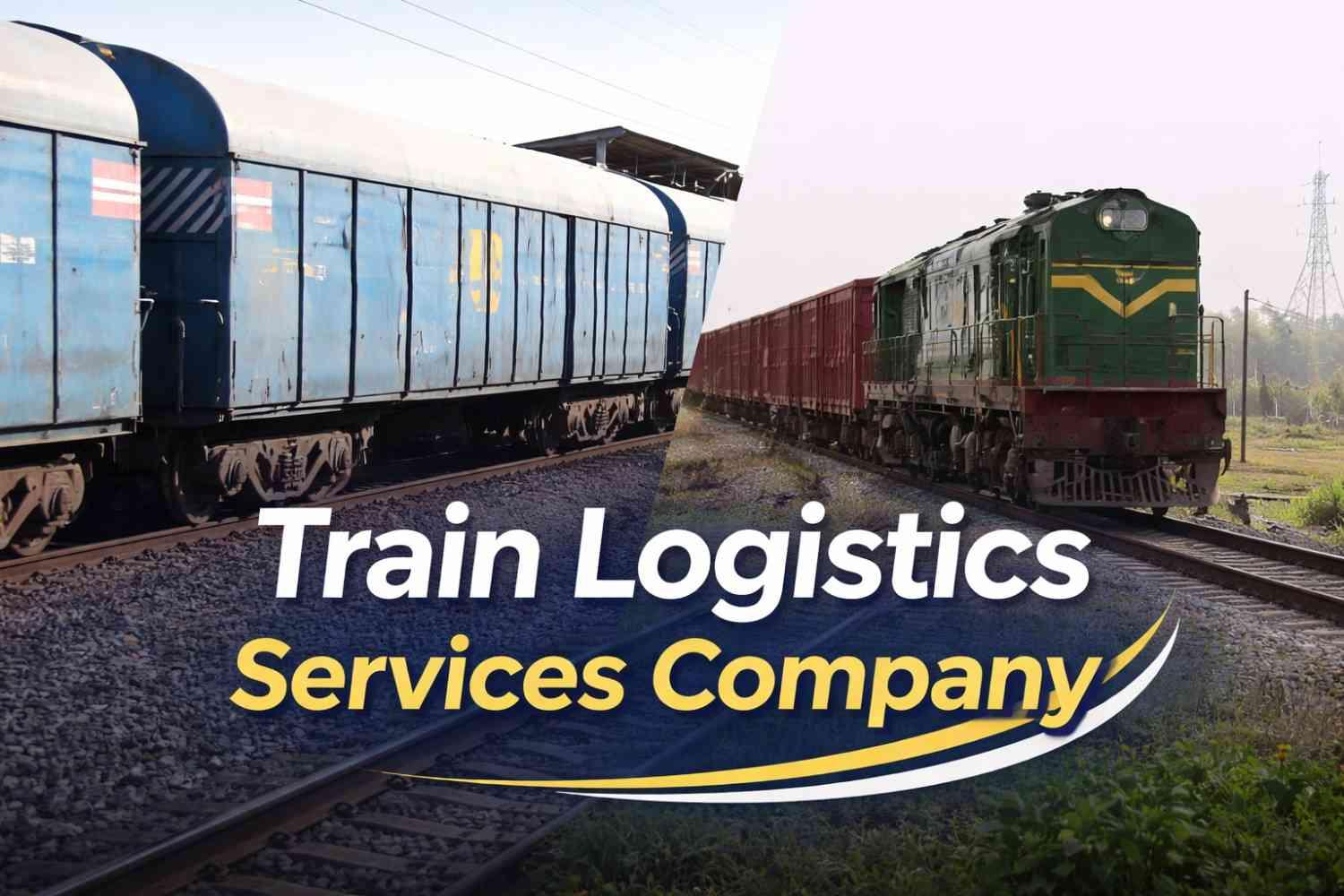
There’s a point in every growing logistics operation where road transport starts feeling unpredictable. Not completely unreliable, but just inconsistent enough to create stress. Deliveries slip by a day, costs fluctuate without warning, and planning becomes reactive instead of structured. That’s usually when teams start seriously looking at train express service.
Not out of curiosity, but out of necessity.
Because in reality, logistics decisions are rarely about preference. They’re about solving what’s no longer working.
The Ground Reality Most Operations Teams Deal With
If you’ve handled dispatch planning, you already know this. Road freight gives flexibility, but it also brings uncertainty. Driver availability, route congestion, state-level delays, weather disruptions, and fuel price swings all combine into something you can’t fully control.
And the problem isn’t just delays. It’s unpredictable.
You can plan around a slow system. You cannot plan around an inconsistent one.
This is where most businesses struggle. They keep adjusting daily instead of fixing the structure behind those adjustments.
That’s where rail quietly enters the conversation.
Why Train Express Service Is Becoming a Strategic Decision
A few years ago, rail logistics was seen as rigid. Good for bulk, not for business agility. That perception has changed.
Today, a well-managed train express service offers something many companies desperately need. Stability.
With fixed schedules, defined routes, and better coordination from every serious rail logistics company in India, rail is no longer just about moving large volumes. It’s about bringing discipline into movement.
Honestly speaking, discipline is what most logistics setups lack when they scale.
When shipments move on planned timelines instead of reactive bookings, everything downstream improves. Warehousing becomes predictable. Inventory planning gets sharper. Customer commitments become more reliable.
What Train Express Service Actually Looks Like in Practice
There’s a misconception that rail logistics is complicated. It can be, but a structured train express service simplifies the experience for the business.
The flow is straightforward when done right. Goods are picked up from origin, consolidated, loaded into containers or rail-compatible units, transported via scheduled trains, and then delivered through last-mile road transport.
The key advantage lies in separation of roles.
Rail handles the long-distance movement efficiently. The road handles flexibility at both ends.
I’ve seen companies reduce operational noise simply by shifting their trunk routes to rail while keeping first-mile and last-mile intact. The difference is not dramatic at first glance, but over time, it becomes very clear.
Fewer surprises. Fewer urgent calls. More control.
Comparing Rail and Road Without Oversimplifying It
This conversation often gets reduced to cost comparison. Rail versus road. Which is cheaper.
That’s the wrong question.
The right question is which model fits your movement pattern better.
Road works well for fragmented, urgent, and short-distance shipments. It offers flexibility that rail cannot match.
Rail excels in long-distance, repeatable, and high-volume movement. This is where long-distance rail logistics solutions deliver real value.
In reality, the most efficient logistics systems don’t choose one. They combine both intelligently.
The companies doing this well are not chasing the cheapest option. They are building stable systems.
The Truth About Affordable Train Shipment Services
Everyone looks for affordable train shipment services, and there is genuine cost advantage in rail for the right use cases.
But affordability should not be misunderstood as simplicity.
Rail requires planning. Missed cut-offs, poor packaging, or weak coordination at terminals can create delays that offset cost savings. This is where inexperienced operators struggle.
A well-managed cost-effective train shipment delivery setup is not just about booking space. It’s about managing timing, handling, and coordination across multiple touchpoints.
This is why choosing the right partner matters more in rail than in road transport.
Choosing the Right Rail Logistics Partner
Not every rail logistics company in India operates with the same level of control.
Some act as intermediaries. Others operate with structured networks, defined routes, and operational discipline.
You can usually tell the difference quickly.
Experienced providers talk about constraints. They explain loading timelines, terminal behavior, and possible delays. They don’t overpromise.
Less experienced ones focus only on pricing and availability.
In reality, the difference between the two shows up during exceptions, not during normal movement.
What Good Railway Logistics Services Actually Solve
A strong railway logistics services setup reduces unpredictability more than it reduces cost.
That’s an important distinction.
When shipments move on a schedule, warehouses can plan loading cycles better. Inventory allocation becomes cleaner. Dispatch teams stop firefighting.
One small observation from real operations. When rail systems are implemented correctly, internal communication drops. Not because teams are disengaged, but because fewer problems need discussion.
That silence is a good sign.
When Should You Seriously Consider Train Express Service
Not every business needs rail. But certain patterns make it worth exploring.
-
Consistent long-distance shipment routes
-
Increasing freight cost volatility
-
Frequent delays affecting customer commitments
-
Ability to consolidate shipments into planned cycles
If these conditions exist, testing train express service is not just an option. It becomes a logical step.
Start with one lane. Measure performance over time. Look at consistency, not just speed.
Where Train Logistics Is Heading in 2026
Rail logistics in India is evolving steadily. Better infrastructure, improved scheduling, and growing private participation are making it more business-friendly.
Technology is also playing a role. Tracking visibility is improving. Coordination between road and rail is becoming smoother.
But the bigger shift is in mindset.
Businesses are moving from reactive logistics to designed logistics. Instead of solving daily problems, they are building systems that reduce those problems.
Rail fits naturally into that approach.
Final Thoughts
If your logistics setup feels unpredictable, expensive, and heavily dependent on daily coordination, it might not be an execution issue. It might be a structural one.
A well-implemented train express service can bring stability into movement, clarity into planning, and control into operations.
Not overnight. But consistently.
And in logistics, consistency is what creates real efficiency.
FAQs
1. What is train express service in logistics?
Ans. It is a structured freight solution where goods are transported over long distances via rail, combined with road pickup and delivery for end-to-end movement.
2. Is train transport cheaper than road transport in India?
Ans. For long-distance and bulk shipments, rail is often more cost-effective and stable. For short or urgent deliveries, road transport remains more suitable.
3. Which industries benefit most from railway logistics services?
Ans. FMCG, manufacturing, retail distribution, and bulk goods sectors benefit the most due to consistent and high-volume shipment needs.
4. How reliable are long-distance rail logistics solutions?
Ans. With proper planning and the right provider, they offer strong consistency and predictable timelines compared to road-only transport.
5. What should I check before choosing a rail logistics company in India?
Ans. Evaluate route expertise, operational experience, coordination capabilities, and how they handle delays and exceptions.

 English
 French
 Spanish
 Deutsch
 Turkish
 Russian